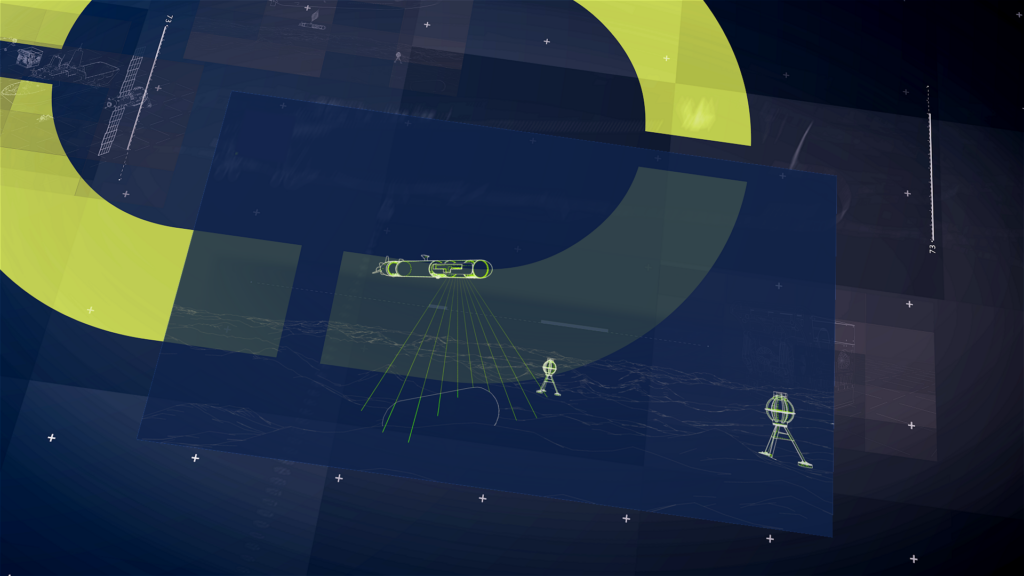
Over 80% of global trade is seaborne. About two-thirds of the world’s oil and gas supply is either extracted at sea or transported by sea and up to 99% of global data flows are transmitted through undersea cables. None of this information is new but it pays to remind ourselves of these facts at a time when reliance on undersea infrastructure has never been higher and is likely only to increase.
The National Protective Security Agency (NSPA) provides the UK government’s definition of Critical National Infrastructure (CNI). While the definition applies to all infrastructure, not just maritime, terms like cables and pipelines are absent. CNI is defined by the impact of loss of its availability, integrity or delivery of essential services. The global economy and need for energy security leads us to conclude that a great deal of that seabed infrastructure is critical to the national interest.
Your infrastructure is at risk
Just as the technological explosion of land and air drones is re-writing land doctrine in Ukraine, the development of highly capable remotely operated and autonomous underwater vehicles has put more of our seabed based national infrastructure at risk from our from our adversaries. While communication pipelines tend to be buried, the nodes and shallow infrastructure are vulnerable, and oil and gas infrastructure is largely exposed and detectable with rudimentary technology.
Technology options
So how do modernising navies regain the advantage and protect our critical national infrastructure? Sub-surface and Seabed Warfare is not new, nor is it a discrete domain of underwater warfare. During Forcys’ discussions with navies around the world, we see the distinctions increasingly blurred between: port and harbour defence; persistent area surveillance; mine warfare; mine countermeasures; environmental protection compliance; hydrographic survey and military data gathering; intelligence collection; anti-submarine warfare and submarine operations. The enabling factor in this is off-board systems. Off-board systems can provide more mission options on increasingly scarce platforms. Containerised solutions provide operational flexibility to switch between roles.
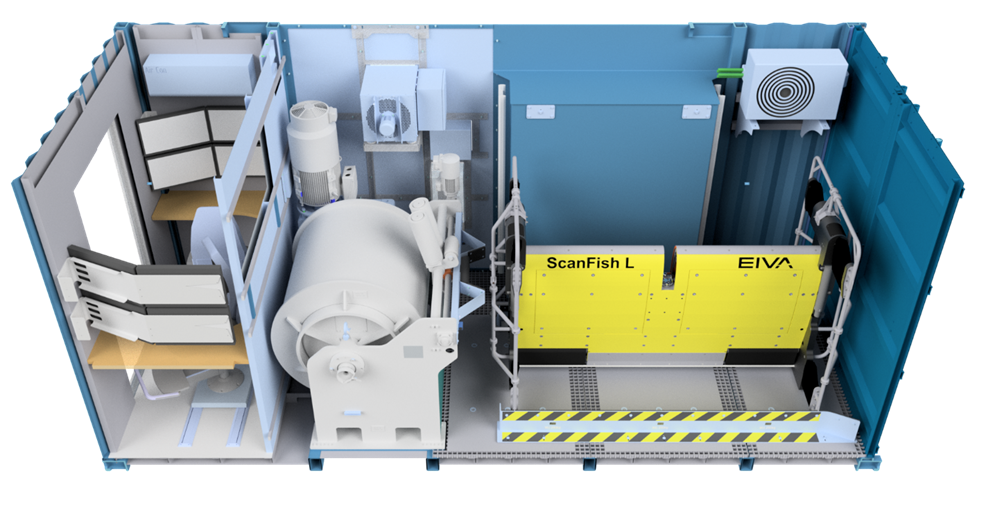
Navies are wise to consider the technical solutions that have been developed for the offshore energy and scientific research sectors. The offshore industries routinely deploy autonomous underwater vehicles (AUV) systems, remotely operated vehicles (ROV) systems, and towed vehicles – all capable of detailed inspections. The same technology that monitors pipeline health – from side-scan sonar to high-resolution laser scans and optical imagery – can be repurposed to identify suspicious activity. In the same way that the effectiveness of a navy is multiplied when it operates at sea (within reasonable limits it could be anywhere), the presence of credible autonomous systems provides an effective deterrent to an adversary. Exploration in deep water is leading to resident AUV and ROV systems performing surveys and maintenance between underwater re-charging and data transfer. These systems can be supported by precise positioning networks and through water communications to enable real-time monitoring, warning, and response. From a defensive perspective the presence of credible autonomous systems employed randomly in an outward surveillance mode may deter an adversary from their course of action.
Recent workshops relating to use of unmanned systems and the likelihood of our forces needing to operate in diverse and potentially unfamiliar environments to protect our nation’s interests all raise a common observation: that industry holds the bulk of the knowledge of what infrastructure lies on the seabed, what that infrastructure is carrying (to allow an assessment of how important it is) and the environmental conditions of the area. Recognising that offshore companies have paid large sums to obtain this data, some of which could be useful to a competitor, there is no appetite to freely share such information. A frequent comment by naval officers is that “you would not believe just how much infrastructure there was on the seabed”. This begs the question of whether navies are ready to operate safely and effectively within such an unfamiliar and poorly understood environment.
Partnerships
So, how can companies be encouraged to release the data they hold? Abstracted to a problem of source protection, security and sharing the answer is, optimistically, yes: anything is possible. But realistically, to overcome significant challenges including multinational ownership, individual company vulnerabilities and cost of implementation this must be government led. At Forcys we are encouraged by initiatives like NATO Digital Ocean and the establishment of the CNI Hub at NATO Maritime Command. At a national level in the UK where I am based, there is surely a role for the NSPA or UK Hydrographic Office in managing a limited access database of seabed infrastructure within the UKs Exclusive Economic Zone for use by UK Defence if required. Perhaps the most compelling reason to support data sharing is the benefits that the improved protection will bring. Time will tell.
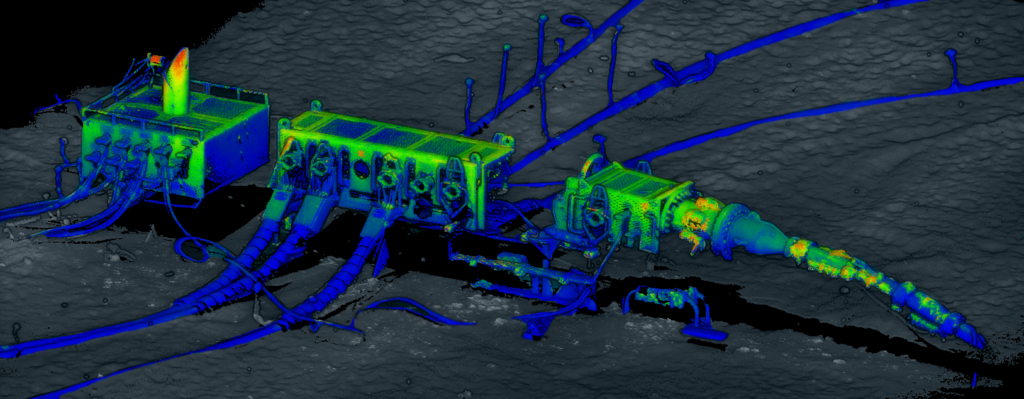
Ultimately, the short-term future of seabed warfare does not lie exclusively in expensive new unproven technologies, but in smarter ways to use the tools we already possess alongside breakthrough capabilities. By working together, we can ensure the safety of our underwater lifelines, keeping the lights on and the world connected. At Forcys, we understand both the threat and the technology. We want to be where technology, experience and innovation meets security.
Justin Hains MBE left the Royal Navy in 2020. Among other professional qualifications, he completed the Advanced Mine Warfare Course and the Amphibious Operations Planning Course during a career as a Mine Warfare Clearance Diving Officer and Principal Warfare Officer (Underwater).
It is an exciting time for defense industry and Australia’s undersea warfare capability. The thought of autonomous vessels surveying, communicating, detecting, and performing tasks, either on their own or with naval vessels (warships and submarines) brings a whole new level of capability for the Royal Australian Navy (RAN) that only years ago seemed fictional.
With the surge of undersea capabilities currently being constructed in the Asia Pacific region, AUKUS comes at a critical time for the Royal Australian Navy and its allies.
The challenge for Australia, with its vast maritime approaches is how it dominates the underwater domain through control and denial. We are excited with the range of acoustic technology and tools that through Pillar 2, will support Australia’s ability to win the underwater battle.
AUKUS
Announced in September 2021, AUKUS is a defence and security partnership between Australia, the United Kingdom, and the United States. Through both its Pillars, AUKUS provides each of its partners with the ability to share, collaborate and work together providing acceleration for various technology areas including nuclear powered submarines and other capability enhancements.
Not Just Nuclear-Powered Submarines
The first focus for AUKUS was on the nuclear submarine program under Pillar 1, cancelling all previous work on SEA1000 and cooperating with the UK and US to acquire nuclear powered submarines over conventional ones. Since the announcement, Pillar 2 has been introduced and provided other specified areas of collaboration for each of the AUKUS nations. It focuses on developing a range of capabilities over several key areas; this will not only provide the ability between AUKUS nations to accelerate these advanced capabilities, but also continue to pave the way for closer military ties and more importantly, interoperability between them. There may be opportunity for other nations to cooperate and recent announcements point to New Zealand taking an active interest.
Undersea Warfare
From Australia’s perspective, the focus areas afforded through AUKUS are critical for the future security in the Indo-Pacific region. The region has never seen a buildup of maritime forces like it is currently witnessing; these forces, both surface and subsurface, can venture anywhere that the regions oceans allow them to. It is imperative that Australia, bordered by three oceans, views its vast underwater approaches as a priority to monitor, deter and defend against undersea adversary capabilities.
The establishment of maritime undersea ranges, the ability to communicate with them via autonomous underwater vessels (AUVs), while being able to track them acoustically will be part of the undersea warfare solution for Australia.
Time Scales – the Now and the Later
Pillar 1 is set in motion, work between nations has commenced with a pathway to acquire both current US and hybrid UK versions of nuclear-powered submarines for Australia. But the acquisition will take time; the construction of nuclear-powered submarines, buildup of personnel, the training of their crews and support networks and upgrading of facilities and infrastructure will not be fully established for some time. Pillar 2 by comparison, will start immediately with work already commencing in Australia through the Advanced Strategic Capabilities Accelerator (ASCA). ASCA will connect and streamline the defense innovation system to drive capability development and acquisition pathways at speed, and more effectively harness and coordinate the innovation ecosystem. In fact, all three nations are working towards each of the Pillar 2 capabilities through development and sharing.
These technology areas, particularly underwater, will transform the AUKUS members’ military interoperability and technology over the 2020s and through the 2030s, with the nuclear-powered submarines supplementing further deterrent capabilities when delivered.
A Changing World – Asymmetrical Capabilities
AUKUS Pillar 2 is about delivering advanced capabilities, including through technologies that can autonomously extend both the reach and range of the military. The Ukraine conflict has seen the rise of autonomous vehicles that have provided a transitional view of modern warfare, not only from the air domain, but also from land and maritime domains.
These capabilities have been highlighted in Australia’s Defence Strategic Review (DSR) as asymmetric. Capabilities like these will play an increasingly important role in the defense of Australia and its military. They originate not just from defense industry but from a range of industries, such as the offshore oil and gas and communications sector, that have been utilizing technologies such as AUVs for decades.
The technology will be modified to carry a military payload to become force multipliers, working in concert with other AUVs, submarines or warships that will provide the RAN and Australia with valuable deterrent and surveillance technologies.
Cooperation Between Nations and Industry
While the US, UK and Australia have always been close allies, the AUKUS partnership is a technology accelerator between the governments of the three nations with a timescale and accompanying gateway of technology transfers, not seen before.
This gateway of technology transfer is not just from the military, but as previously mentioned, technology firms with high Technical Readiness Level (TRL) capabilities that have been working in industries such as oil and gas can benchmark their decades of working with autonomous vessels for defence.
With the backing of 50 years of experience in energy, ocean science and defense, Forcys Australia are introducing game changing technology through its expertise in the underwater domain with highly sophisticated, TRL9, – agnostic payloads for platforms. Through our technology partners, Forcys specialize in autonomous vessel payloads, acoustic underwater communications, sonars and camera capabilities, providing the benchmark for future AUVs and remotely operated asymmetrical capabilities.
In addition to the above, Forcys expertise in intruder detection sonars, command and control software and remotely operated towed vehicles, environmental sensors and laser scanners already provides world leading capabilities deployed with many navies around the globe.
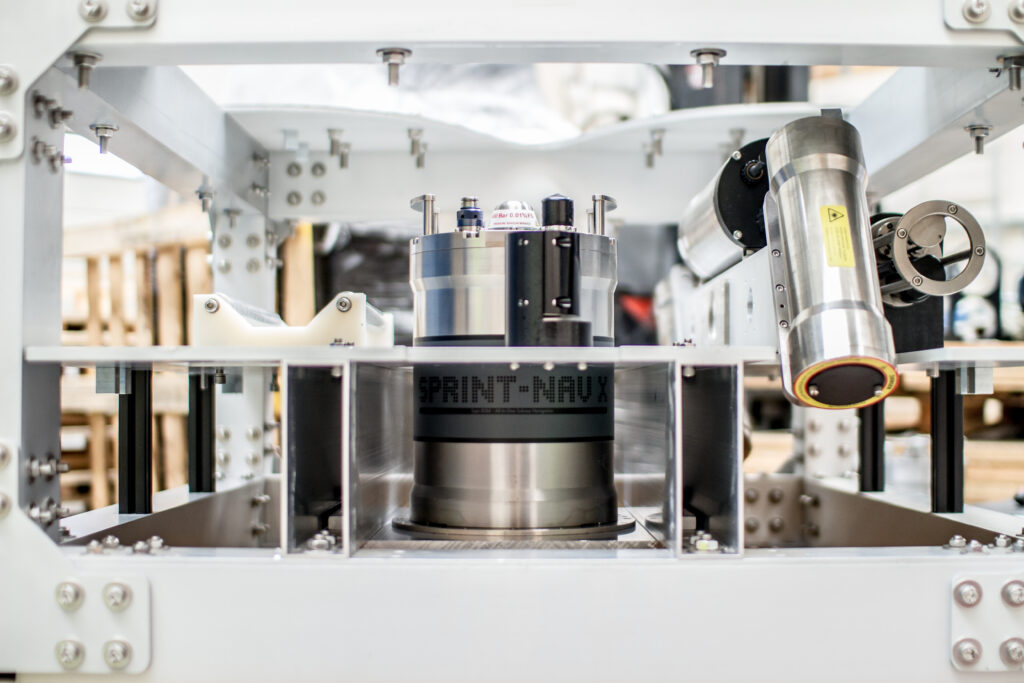
Forcys Australia are already supplying sensors to the RAN, Defence Science Technology Group (DSTG) and key industry stakeholders, we’re especially excited about the opportunities for Forcys with AUKUS Pillar 2 undersea warfare. Our capabilities are not just limited to asymmetric warfare; they can be utilized for underwater ranges, long range acoustic communications, MCM, along with tracking and protection of critical national infrastructure.
If you’d like to hear more about our vision for the AUKUS partnership, contact us for more information.
Sean Leydon retired from the Royal Australian Navy in 2020. Trained as an engineer, Sean completed an MBA as well as Masters degrees in both Strategy and Management and Maritime Studies.
Forcys brings together leading technologies, offering a comprehensive naval and subsea capability to the world defense market
Forcys is excited to announce further expansion across its global operations, adding to its team of experts dedicated to equipping navies with the most advanced underwater solutions, and establishing a US entity. We’re committed to working alongside you and your supply chain to elevate your lethality and situational awareness in the critical undersea domain.
Counting on a legacy built over five decades, Forcys’ technology offer is trusted by navies worldwide. We provide a unique range of remote, autonomous, and networked control capabilities that deliver integrated underwater intelligence for every mission.
In a significant move, Dan Zatezalo joins Forcys as General Manager for Forcys Inc. and Head of Global Sales. Dan was responsible for US DoD sales at sister company Sonardyne Inc. delivering continued growth. At Forcys he will look to instill the same customer led culture. “I’m excited to take on the new role. I cherish the responsibility that comes from supporting our customers at a time when new technology challenges the way we have been acting”.
Covering a range of maritime operations including asset protection, littoral strike, mine warfare, submarine rescue, and submarine and anti-submarine warfare, Forcys seeks to transform the underwater domain by enabling increasingly distributed and automated operations. This is made possible by integrating and bringing to market world-changing solutions from leading technology partners Chelsea Technologies, EIVA, Sonardyne, Voyis, and Wavefront Systems. Ioseba Tena, Commercial Director, “Since we launched Forcys eighteen months ago, the underwater domain has continued to receive unprecedented levels of interest. It’s no longer a question of when autonomous systems will become a factor. It’s now a question of what we do to counter them. It’s time for original responses to novel threats. Time to create our own fleets of systems and counter measures. At Forcys we are ready to spearhead the delivery of situational awareness sensors and software to support this transition. It’s an exciting time for our team and we are looking forward to supporting our global customer base.”
Doctrinally, the concept of amphibious operations has followed a deliberate linear approach from planning to termination with the landing force only entering the area of operations once rehearsal and re-embarkation have been completed to suit the requirements of the planned mission. As an example, the Royal Navy plans to deploy two Littoral Strike Groups (LSG) on a permanent basis, to extend the UK’s presence, insight, and influence globally. The most likely operating areas are the Indo-Pacific and North Atlantic Oceans. The forces are far more likely to be operating in the eventual amphibious operating area before an operation is conducted. In our view, the familiar acronym PERMSAT (Planning, Embarkation, Rehearsal, Maneuver, Shaping, Action, Termination) will be compressed to chronologically and geographically to three broad activities: persistent presence and posture; concentration of amphibious force, action and termination. But they will overlap and compete for resources and space. So how could the LSG maintain its situational awareness (and a degree of presence) while it must depart a littoral zone to reorganize and rehearse?
Advance force and pre-landing operations are predominantly covert in nature and sequenced as close or coordinated with the assault to minimize the resource and logistic burden and maintain the advantage of surprise.
Operational choices
Vessels operating on the surface are vulnerable and can disclose favored channels or operating areas. Crewed Mine Countermeasures Vessels (MCMVs) require additional tailored defensive support if operating within enemy engagement range. Even uncrewed surface assets can be targeted by coastal defense missile and artillery systems which must be neutralized before assets are committed close to land. As swarm attacks by surface and air drones become more accurate and lethal, it is conceivable that surface assets will only be used once the landing force has committed to its area of operations and even then, at increased risk of destruction by enemy action.
So how does a pre-deployed LSG prepare itself for an assault when it is already in or close to its operating area? If stores and vehicles need to be reorganized from efficient and safe storage to assault order, the amphibious force will need to leave the littoral zone at the very time that it is looking to increase situational awareness. Meanwhile any advance force, pre-landing or MCM activity must operate without the need for additional defensive capabilities and without advertising the amphibious operating area geometry. The use of surface assets for low-risk deception only is a soft option that negates the need for adequate organic protection capability within the LSG design. The deduction is simple, mitigate for a denied or contested surface environment by augmenting sub-surface capabilities: the underwater domain is more covert and, for the time being at least, more survivable.
Technical options
Uncrewed, autonomous systems could be left behind to continue intelligence, surveillance, and reconnaissance (ISR) and MCM “tasking, and potentially as the senor-decider-effector chain is established they could contribute to area denial, pending the return of the amphibious force.
These assets could be mobile – either crawling or swimming before settling again to conserve power, to keep pace with the changing requirements of the littoral strike group and frustrate counter measures by the enemy. As the LSG achieves its objective and moves closer to sustain itself for as long as required, these assets could provide the seaward sensor/defensive screen or move with the task group to maintain a positioning network independent from GPS.
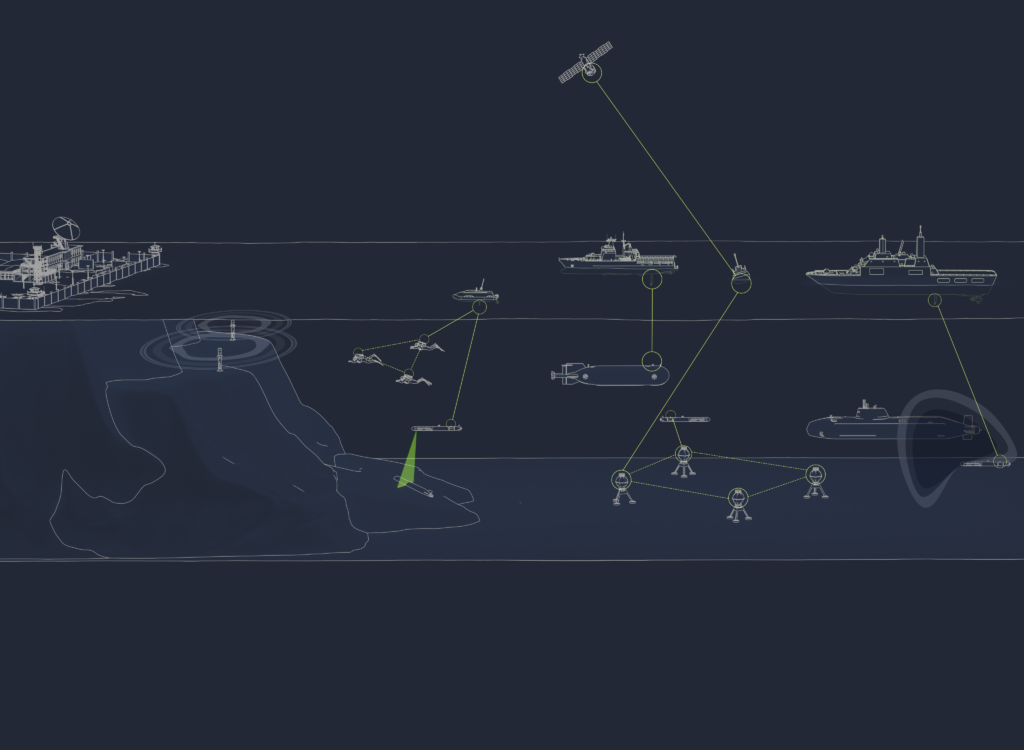
The sense-decide-effect system of system of systems will rely on a robust secure underwater communication network. In our vision exploiting the technology carried by each of the previously mentioned self-propelled nodes and vehicles.
Proven Capabilities
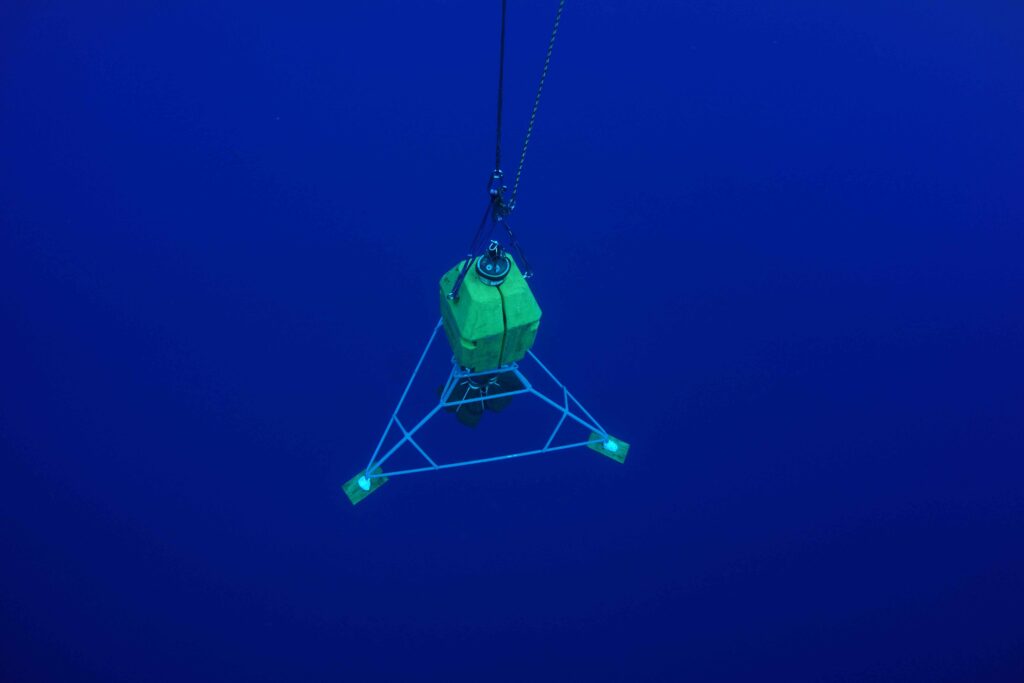
Our technology partners have over 50 years’ experience in the offshore energy sectors. Integration and testing in the amphibious context is the next step. Integration of acoustic array technology could maintain the force’s level of situational awareness. This technology is well understood and used extensively in the energy sector. Pre-positioned and pre-surveyed transponders can already provide centimeter accurate positioning independent of GNSS input. Sensor agnostic seabed nodes are already available, integration with acoustic, seismic, magnetic sensors is low risk and achievable within a very short time frame. Acoustic and optical communications options can support data transfers at speeds up to 1Gb/s depending on range.
Forcys is ready to help you now. Early engagement is needed to help solve the challenges the future operating space presents. We can use indicative blocks of proven technology to show you how our technology can help.
If you’d like to hear more about our vision of amphibious warfare in the future or think we could deliver some of these capabilities in partnership, contact us for more information.
Justin Hains MBE left the Royal Navy in 2020. Among other professional qualifications, he completed the Advanced Mine Warfare Course and the Amphibious Operations Planning Course during a career as a Mine Warfare Clearance Diving Officer and Principal Warfare Officer (Underwater).
Forcys brings together leading technologies, offering a comprehensive naval and subsea capability to the Australian defense market.
The release of Australia’s Defence Strategic Review pivots national defence interests toward the Indo-Pacific and places increased interest in the underwater domain. It calls out for new autonomous underwater vehicles to support their mission by highlighting the AUKUS Pillar 2 collaboration and seeks to work in close partnership with industry. It serves as validation for the recent expansion by Forcys Australia: new offices and a new team to work with customers that are already developing innovative underwater autonomous systems.
Backed by over fifty years of experience, Forcys offers the global maritime naval sector remote, autonomous, and networked control capabilities delivering integrated situational awareness to customers in the underwater domain.
Covering a range of maritime operations including asset protection, littoral strike, mine warfare, submarine rescue, and submarine and anti-submarine warfare, Forcys seeks to transform the underwater domain by enabling increasingly distributed and automated operations. This is made possible by integrating and bringing to market world-changing solutions from leading technology partners Chelsea Technologies, EIVA, Sonardyne, Voyis, and Wavefront Systems.
‘This feels great,’ said Sean Leydon, Regional Manager Asia Pacific at Forcys. ‘Although we are taking a relatively small initial step, this is a major milestone for our operations in Australia. And we are setting up in the right location. We are so grateful to the NSW government who supported us in our search. We also want to thank the University of Technology Sydney for their welcome. Innovation is fueled by partnerships and the UTS Tech Lab enables us to work closer both with our customers and with academia. The lab is turning into a world-class research and development facility. I want our new Australian team to play a part in that.’
‘We are delighted to welcome Forcys Australia as an Industry Partner to the UTS Tech Lab,” said Professor Robert Fitch, (acting) Director UTS Tech Lab. “It’s a clear example of how we are supporting industry partners with the growth and retention of talent. Working alongside innovators in the underwater domain is also a great opportunity for the university to target our research where it is needed such us the AUKUS Pillar 2 Undersea Robotics Autonomous Systems (AURAS) project.”
If you are visiting Sydney please get in touch.
In the final installment of the DiveTrack series of blogs, retired Royal Navy Cdr Justin Hains MBE focuses on safety and future use cases. If you want to learn more about our technology partner Sonardyne‘s latest product remember to get in touch with our team.
If you haven’t yet read the previous blog articles in the series then follow this link.
An extra layer of safety
Divers are very well trained, but humans make mistakes. Errors made in diving can have fatal consequences. With DiveTrack the supervisor is an extra layer of diving safety: they receive the alarms the diving set generates at the same time as the diver, they can see cylinder contents nearing minimum safe levels or in the case of rebreathers, if the gas the diver is breathing is unsafe. The supervisor can either change the plan or abort the dive before the situation becomes life-threatening. DiveTrack provides an additional layer to the equipment safety case and to the risk mitigation in place for the dive.
The ability to send automated and pre-formatted messages to and from the dive computer caps the safety enhancements delivered by DiveTrack. The basics include “Diver well” and “Reached target” while emergency calls include “I need assistance”, which provides a direction and range to all other divers on the net. The potential of the data transmission is only limited by the sensor routed to the computer: equipment parameters (gas compositions and CO2 scrubber monitoring) and biometrics (heart rate, respiration rate, core temperature) are all possible now if required by the customer.
Future proof
The DiveTrack system has capacity for future upgrades. The system is running at a fraction of its maximum capacity. This makes DiveTrack a safe choice for customers who are investigating biometric monitoring, experimental diving, performance enhancement and operational advantage or even for the key requirement of all diving equipment: safety.
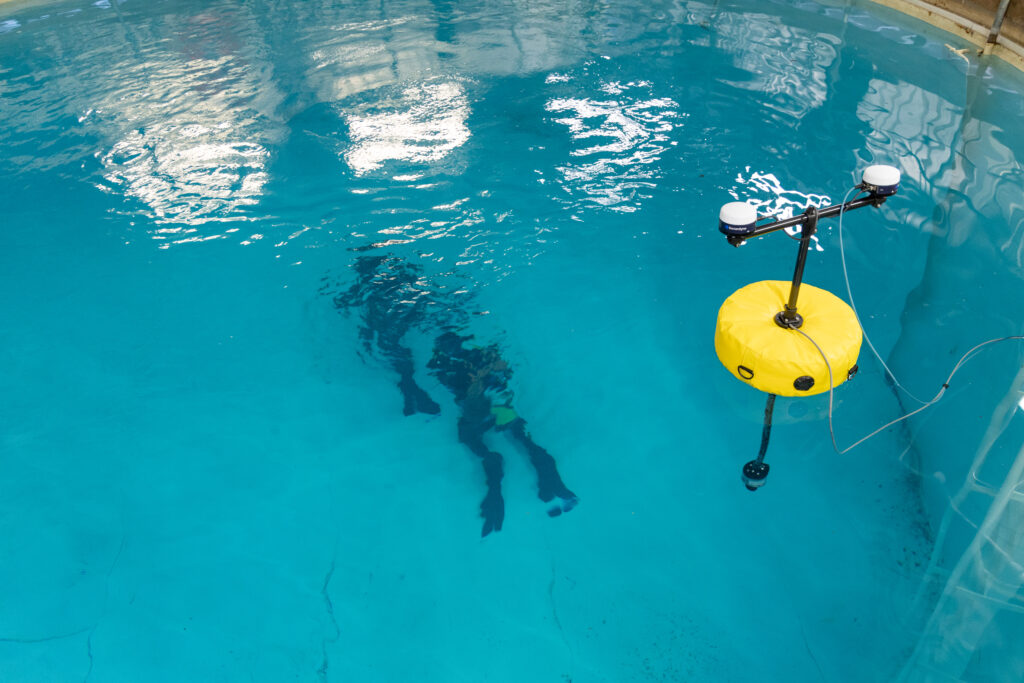
DiveTrack is what I needed off Portland all those years ago. It enhances resilience and safety. The mission is more likely to succeed. This is proven technology adapted to a diving requirement from our Technology Partner Sonardyne: acknowledged and trusted experts in underwater acoustic tracking and communications. It has ample headroom for additional data exchange requirements in future. It is compact, neutrally buoyant in sea water, easy to use and reliable. It has been successfully integrated and demonstrated with closed circuit rebreathers and open circuit equipment.
Contact us today to discuss your requirements.
Forcys brings together leading technologies, offering a comprehensive naval and subsea capability to the United States Navy and its supply chain.
The undersea battlespace is becoming increasingly contested. In response to this threat, the United States and its allies are developing autonomous and remotely operated platforms that deliver enhanced mission capability, increased capacity, and improved lethality. Forcys has appointed Captain Christian Haugen, USN (Ret.), to lead business development efforts in the United States in support of this evolving mission.
Backed by over fifty years of experience, Forcys offers the global maritime naval sector remote, autonomous, and networked control capabilities delivering integrated situational awareness to customers in the underwater domain.
Covering a range of maritime operations including asset protection, littoral strike, mine warfare, submarine rescue, and submarine and anti-submarine warfare, Forcys seeks to transform the underwater domain by enabling increasingly distributed and automated operations. This is made possible by integrating and bringing to market world-changing solutions from leading technology partners Chelsea Technologies, EIVA, Sonardyne, Voyis, and Wavefront Systems.
Commenting on Christian Haugen’s appointment, Ioseba Tena, Commercial Director of Forcys, said: ‘The United States has led the development and introduction into service of uncrewed underwater and surface vehicles over the last two decades. Their efforts have benefited all of us. They achieved this by working closely with industry and selecting best-of-breed capability. We want to play our part and Chris’ appointment is part of a long-term commitment to develop solutions that will accelerate the introduction of more effective systems.’
Christian Haugen, Business Development Manager for North America, explains: ‘I am really looking forward to engaging with our existing customer base and eager to explore ways in which we may continue to add value. Beyond that, I am keen to explore ways in which we can closely integrate solutions from our technology partners to develop innovative capability to enhance the situational awareness and effectiveness of the Navy’s fleet of unmanned systems.” Forcys will be supporting our technology partner, Sonardyne Inc, at Sea-Air-Space 2023 in National Harbor, Maryland. If you’d like to arrange a meeting with the Forcys team, please get in touch.
In the second of the DiveTrack series of blogs, retired Royal Navy Cdr Justin Hains MBE illustrates how divers can enhance their current operations through the intelligent use of underwater communications and tracking. Read on to find out how diving supervisors can be kept in the know with our technology partner Sonardyne‘s latest product.
If you haven’t yet read the first blog in the series then follow this link.
Enhanced Situational Awareness
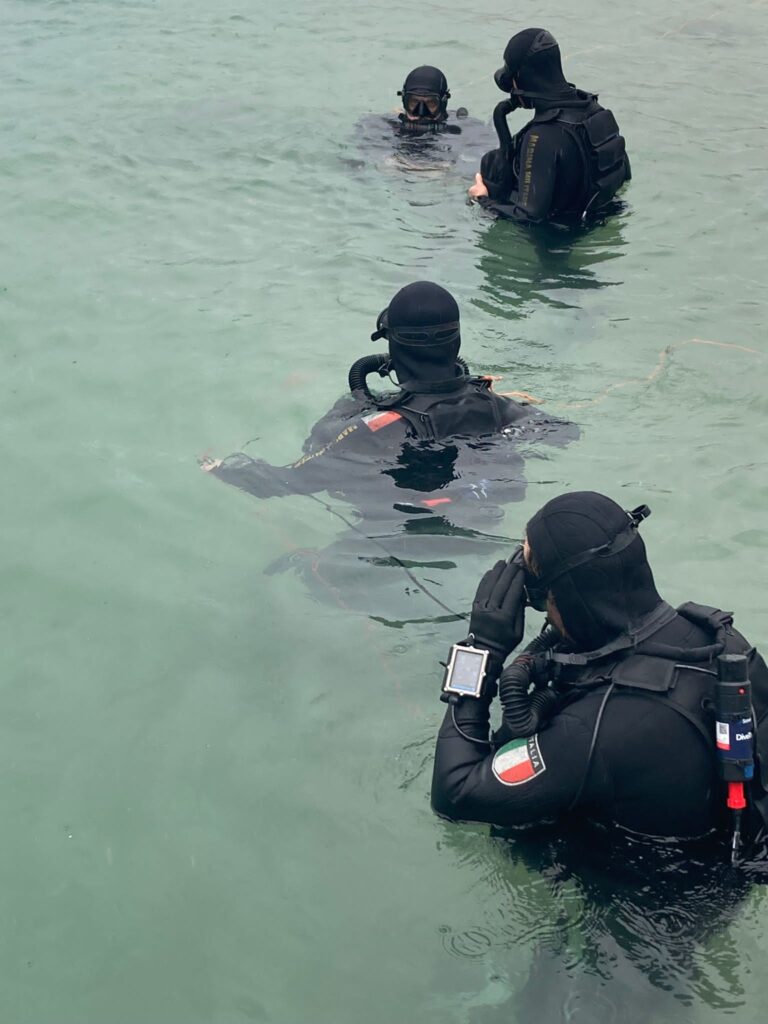
DiveTrack from our technology partner Sonardyne shows the supervisor where the divers are by range, bearing and depth. This positional information can be georeferenced by GPS and displayed on a chart layer. The supervisor can also be provided near real-time cylinder pressures, equipment alarms or alerts. Future features will include gas analysis of the breathing loop (PPO2 or CO2 content for example) and biometric data. Better information supports better decision making.
The diver’s positions are constantly updated. This has two operational advantages: first, the divers know where they are with a high degree of accuracy without the need to surface – they remain covert. Second, the divers arrive on target having spent the minimum time in the water, in better shape for the assault or recce. Covert beach surveys can be completed accurately without the need for a floating GPS antenna attached to the diver or constantly resurfacing to ensure the snag-line survey is correctly positioned – no easy task in current and swell.
The supervisor can also see when a diver is using gas at an unexpectedly high rate that endangers the mission. They can see if a diver is ascending or worse descending unexpectedly: a significant danger on enriched oxygen equipment. Because the supervisor can implement changes to the plan based on enhanced situational awareness the mission is more likely to succeed. If the team can react to unforeseen events efficiently, rather than working through pre-planned responses without any more detail, the team is one step closer to the ‘hyper-enabled operators’ envisaged by United States Special Operations Command.
The result of improved situational awareness is more efficient insertion and extraction and greater confidence in the accuracy of any data collected.
Tactical Flexibility
“No plan stands first contact with the enemy” – or, in my experience, salt water. A covert dive to an offshore installation or a long-range insertion for beach reconnaissance both suffer from the same problem: there is no way of recalling the divers covertly without increased risk of detection on the surface. DiveTrack provides reliable through water communication via a selection of pre-formatted messages between supervisor and divers. In extremis, this could be an “abort mission” sent to all divers followed by a “return home” command which triggers a display of bearing and range information on the Shearwater Petrel dive computers and optional head up displays that will home them back to the dive boat, even as it moves.
But aborting the dive is the last resort. Far better is managing the mission dynamically. If the boat must move due to an enemy patrol, the beach recce team can be informed instantly. A “go to [new] waypoint” command can be sent by the supervisor at any time.
The system combines the accuracy of GPS with proven underwater acoustic ranging technology. But DiveTrack can still function in a GPS-denied battlespace. While the errors in navigation will increase over time, the relative positions of the dive boat and divers will remain accurate, and communications are unaffected. The mission can still proceed, reverting partially to previously used methods of visual sightings, but the benefits highlighted: enhanced situational awareness and tactical flexibility remain.
Want to know more?
In my next blog I will focus on the safety aspects of DiveTrack and how it has been built to be future proof.
Forcys brings together leading technologies, offering a comprehensive naval and subsea capability to the Australian defense market
Evolving threats, unlawful maritime claims, military coercion, all these factors are destabilizing the Asia Pacific region and causing many lawful states to reconsider their defense strategies. Australia’s 2020 Defence Strategic Update and the anticipated March 2023 release of Australia’s Defence Strategic Review has brought these issues into sharp focus while demanding growing self-reliance for delivering deterrent effects. Today’s launch of Forcys Australia and the appointment of Sean Leydon as Regional Manager for Asia Pacific, is in direct support to this strategic need.
Backed by over fifty years of experience, Forcys offers the global maritime defense sector, remote, autonomous and networked control capabilities that deliver integrated situational awareness to customers in the underwater domain.
Covering a range of maritime operations including asset protection, littoral strike, mine warfare, submarine rescue, and submarine and anti-submarine warfare, Forcys seeks to transform the underwater domain by enabling increasingly distributed and automated operations. This is made possible by integrating and bringing to market world-changing solutions from leading technology partners Chelsea Technologies, EIVA, Sonardyne, Voyis and Wavefront Systems.
Commenting on the Australia launch, Ioseba Tena, Commercial Director of Forcys, said: ‘I am excited, Australia is taking bold decisions in the underwater domain. There’s been a realization that uncrewed systems take a lot of the risk out of the conflict, they afford higher levels of attrition and deliver higher coverage rates. The sense of urgency is palpable and there is an appetite to work with industry experts to support the transition. We are keen to support a sovereign, sustainable capability.’
Sean Leydon, Regional Manager for Forcys’ Asia Pacific region, explains: ‘Our technology partners already engage with the Australian Government and industry, so our initial focus will be on improving those interactions by providing an in-country presence. However, our ambition doesn’t stop there, we are actively recruiting engineers to help support our existing customers and in time to develop sovereign capability. I’m looking forward to help make a difference.’
Forcys is exhibiting at the NAVDEX exhibition in the United Arab Emirates between 20th and 24th February 2023 at stand A-029. If you’d like to arrange a meeting with the Forcys team, please get in touch.