Executive Summary
Naval warships are vulnerable alongside. While gangway staff are present 24/7 at a ship’s entry point and bases are patrolled with security guards, cameras and fencing, the fact remains that today one of the greatest asymmetrical threats can come from a perpetrator, with basic diving equipment and little training, approaching a ship underwater, undetected and with relative ease.
This paper by Sean Leydon, Regional Manager at Asia Pacific for Forcys, discusses the issues that face modern warships and submarines alongside either at home or away, the degrees to which they have been targeted under this vulnerable state, and solutions to provide protection to both the warship and its crew.
Asymmetric Threats
History has recorded several examples of what the asymmetrical threat of placing rudimentary explosive devices on the hulls of ships can cause. From the Vietnam conflict where a diver sank the 9,000-ton USS Card with an explosive attached to the hull, to the more recent incident on 12th May 2019 where four commercial ships were targeted in the port of Fujairah in what the UAE described as a “sabotage attack”. An international investigation concluded that there were “strong indications” that the attacks were perpetrated by a sophisticated “state actor” that breached their hulls with explosives. The threat is real and so far, has proven difficult to detect and counteract without a dedicated intruder detection sonar.
From Surface Attack to Underwater Attack – The Increased Difficulty
While surface attacks on vessels in port have delivered devastating effects, the barrier to transition this threat to the more complex underwater domain has been mainly due to the access and cost of the technology and the training required to utilize it.
From the early 1990’s however, the number of sport diving rebreather brands and underwater motorized equipment has rapidly increased. Advanced sport divers increasingly tackle longer, deeper, riskier dives using equipment once available only to armed forces or professionals. Acquiring rebreather or scuba equipment and receiving technical training is no longer a barrier.
Protection of Assets – Capability Phases
Security of warships in port includes the requirement to inspect, detect and identify anomalies on ships, and wharfs and to also employ fast boats as a deterrent. As previously mentioned, base security and surveillance in ports usually covers the above water threat, including those on the water such as boats and swimmers, however, it does not cover the underwater threat from divers and underwater vehicles.
The following discusses the different phases required to defend against the underwater threat.
Phase One – Surveillance
The system must be capable of providing a constant picture of the underwater environment and any changes to it. The capability used must not only be able to provide surveillance, but be transportable, scalable, networked, and simple to operate. While permanent systems can be setup in a ship’s home port, it must be transportable and easy to setup by ship’s company if the ship has berthed in a foreign port.
Phase Two – Detection
Surveillance is only the first step of defense against a threat. The system in place must also be able to detect when an intruder (not marine life or false targets) is within an area of interest. The system needs to continuously monitor the surrounding area, understand the difference between an intruder or false target, and track the designated target of interest that it has acquired.
Phase Three – Tracking
Sonar is capable of generating thousands of detections. Each one of these needs to be tracked. Their direction of travel and behavior will provide important cues to the next phase.
Phase Four – Classification
Whether the intrusion is from a scuba diver, rebreather or underwater vehicle, the system should provide the classification of the target for the end user. This will allow the response process to be coordinated with the appropriate action.
Sentinel: The world’s leading Intruder Detection Sonar
The Sentinel Intruder Detection Sonar (IDS) from Wavefront Systems is a commercial off-the-shelf (COTS), compact, lightweight system with a proven track record of global performance for the military and private use. Using sophisticated sonar processing algorithms, Sentinel provides fully automatic detection and tracking of potential underwater threats and targets of interest while analyzing their behaviors. It provides protection against underwater threats including:
- Divers (closed/open circuit);
- Swimmer Delivery Vehicles (SDVs);
- Diver Propulsion Vehicles (DPVs); and
- Unmanned Underwater Vehicles (UUVs).
Portable
Weighing only 32 kgs, the Sentinel head is ideally suited for deployed warships or security units responsible for its safe arrival/berthing. Consisting of a sonar head, workstation, cables, and deployment frame, Sentinel is mobile and simple to set up. This enables operators to quickly initialize the system and secure a berth, whether deployed over the side or through the ship’s hull.
Operation
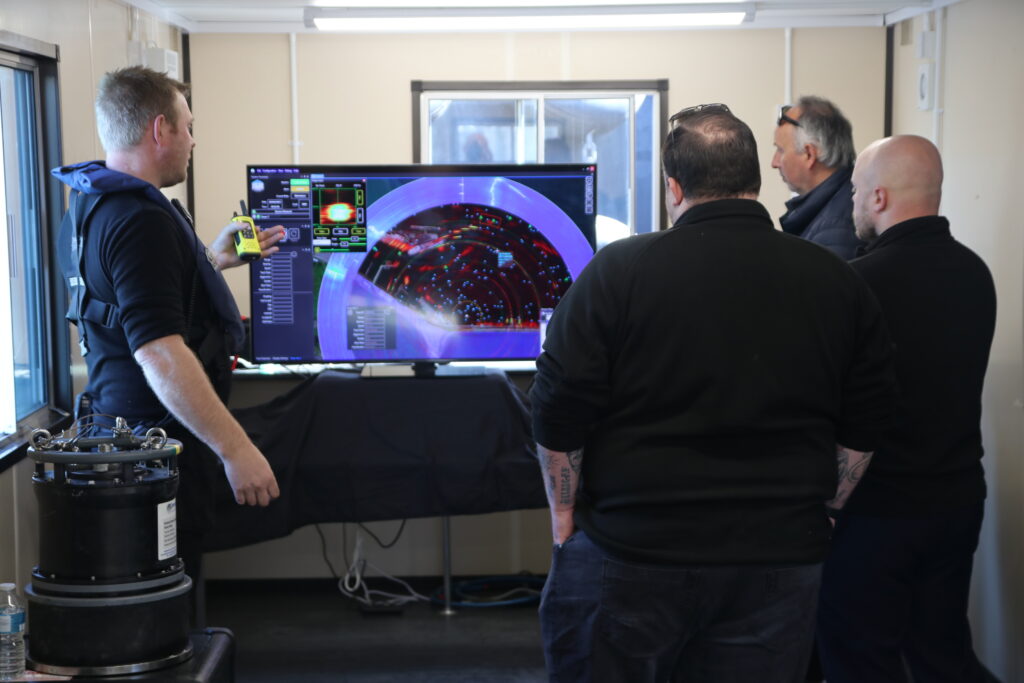
Operation of the Sentinel IDS GUI is simple, intuitive, and highly configurable. The tactical picture can be fused with localized charts and tailored to operators’ requirements, allowing the effective detection, tracking and classifying of targets.
Classification – Active and Passive Tracking
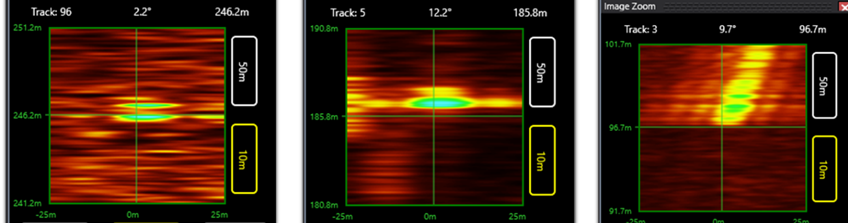
Sonars can receive signals either passively (receive only) or actively (transmit and receive) – Sentinel, uniquely combines both active and passive processing using it’s patented SInAPS® technology (Simultaneous In-band Active and Passive Sonar) allowing the passive emissions from the target to help detection and tracking when active tracking may not be possible. Furthermore, this can also help with classification of targets (for example marine life do not generally emit sound, while an AUV provides constant propeller noise).
Both types are tracked and displayed in an intuitive way which helps the operator associate the tracks and make the correct tactical decisions.
Deployment
Sentinel is designed to protect ports, harbors, commercial and naval vessels, offshore platforms, and waterside facilities. Over 200 systems sold and installed, Sentinel operates across all oceans and is already used to protect naval bases, military vessels and critical national infrastructure.
Networked System
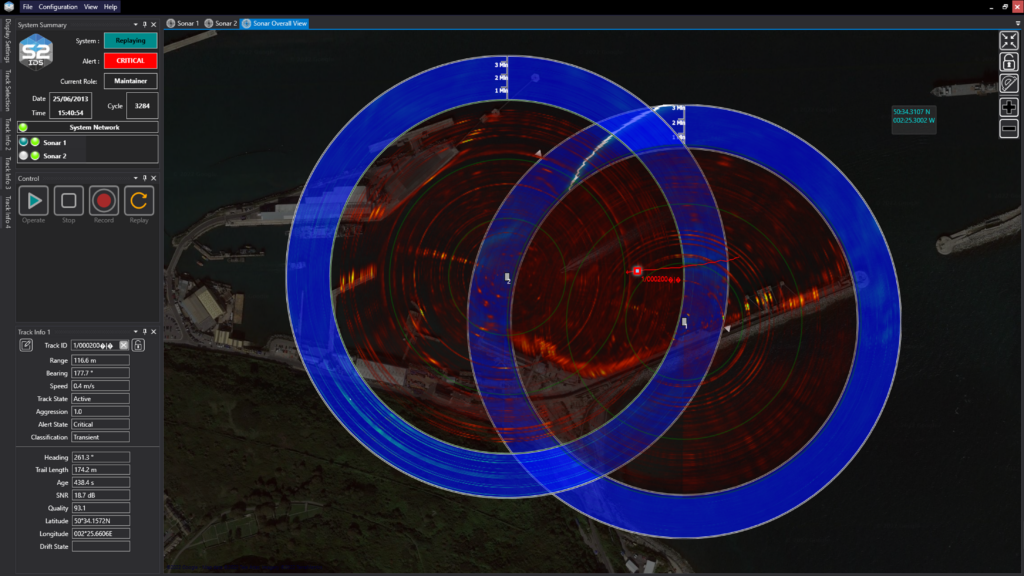
Sentinel is capable of standalone operation or in multiple sonar head configuration for a larger security perimeter. The Sentinel sonars heads can be deployed at points around a port and work together using Wavefronts unique Super Inheritance™ technique to deliver a single set of threats to the user.
In Summary
Wavefront Systems deployed the first Sentinel in 2009, it was a revolutionary sonar in that it was both extremely portable and offered unrivalled range and performance. Since that time the system has evolved to enable new methods of deployment, networked capabilities and improved tracking. The recent addition of simultaneous passive sonar capability means that Sentinel is yet again setting the performance at a higher bar than was thought possible. This is even more important as the threat from state actors is on the increase
If you would like to learn more about Sentinel IDS please feel free to get in touch with the team.
In an interview with The Watch, Captain Christian Haugen, USN (Ret.), provided a perspective on the US’ continued dominance of the underwater domain and subsea and seabed warfare (SSW). Asked about its importance, Haugen stated that the underwater domain remains crucial to any maritime strategy and especially so in the Indo-Pacific region. He explained that uncrewed underwater vehicles (UUV) play an increasingly important role in a variety of missions, including intelligence gathering, minesweeping, and anti-submarine warfare. Haugen went on to say that the United States Navy has a long history of leadership in the UUV space, developing and deploying UUVs for decades, and it continues to invest heavily in this technology.
Haugen, who is now the Business Development Manager for Forcys in the United States, said, “The US Navy’s dominance is due to several factors starting with our strong alliances. The US Navy works closely with countries like Australia, Japan, and Korea. Working with well-trained and well-equipped navies in support of common security objectives is a force multiplier. This is particularly important in the Indo-Pacific region, which is the point of most friction and greatest stress on our ability to answer a near-peer competitor. Captain Haugen believes the AUKUS security pact between Australia, the United Kingdom, and the United States is another significant development in the underwater domain.
Captain Haugen believes dominance of the undersea domain will be crucial to any conflict in the region. At some point, should tensions escalate, task forces and other surface vessels will have to withdraw outside the range of our adversary’s long-range anti-surface missiles. Submarines and uncrewed systems, both UUVs and seafloor networks will remain to provide indications and warnings and should it be necessary, take the fight to the enemy.
High-level guiding documents such as the CNO’s Navigation Plan (2022), the Navy’s Unmanned Campaign Plan (2021), and the Submarine Forces Commander’s Intent (2020), all emphasize the importance of SSW. Budgets and programs support the push to achieve and maintain a technological advantage over its adversaries in the UUV space. The Navy’s superiority will continue to come from investment in research and development as well as continuing to foster a close relationship with the U.S. defense industry.
Keeping the advantage is about meeting the challenge
Haugen explains. “The US Navy faces a number of challenges in the underwater space, including the development of new UUV capabilities by near-peer competitors, the challenges of processing and analyzing the massive amount of data that UUVs can generate, and the limited bandwidth that is available to UUVs.
“Our near-peer competitors are catching up quickly. The first thing to be aware of is that they continue to develop capacity through aggressive ship and submarine building programs. Next is that they continue to improve their technology. The Navy’s 30-year shipbuilding plan now relies heavily on uncrewed maritime vessels to meet our capacity needs. Delivering those vessels—surface or undersea—will require honing technologies to allow those systems to accomplish complex missions with high levels of autonomy.
“From engineers to operators, it’s the experts in everything from UUV design and construction to UUV deployment, operations, and maintenance that are keeping us formidable in SSW. We continue to push the limits of capability and expand mission sets for UUVs through aggressive experimentation and exercises to create new doctrine, tactics, techniques, and procedures.”
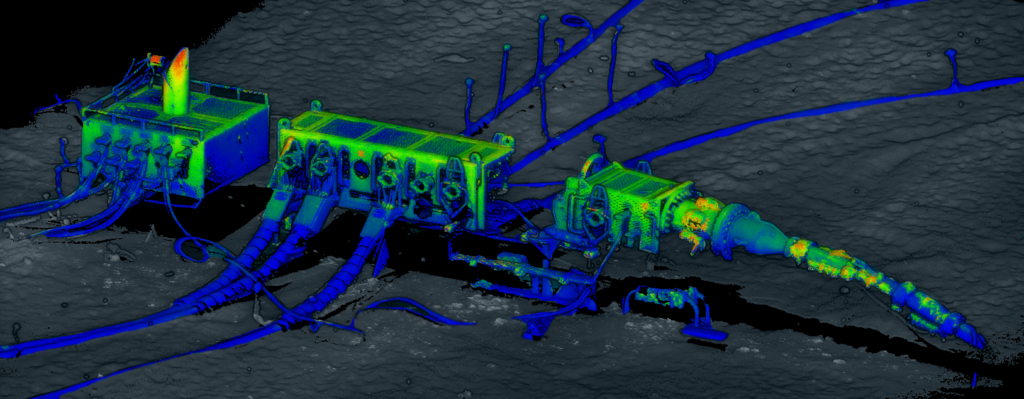
Uncrewed systems bring new challenges. “Data overload is a good problem to have. New underwater sensing technologies can generate massive amounts of data. Take for instance the optical payloads developed by our technology partner, Voyis. They generate three dimensional maps with incredible resolution of actionable data. But just how do you share it without recovering to the surface.” You should communicate with them. Haugen describes this challenge, “The underwater domain is limited by the acoustic communications data rates. And that same acoustic comms compromises the existence and location of the undersea system. Optical systems offer higher data rates but require very close proximity for the communicating systems. Exfiltrating data or passing mission commands is a problem that will get bigger before it gets smaller.”
It’s a question of trade-offs
“The edge processing required for autonomous systems becomes a huge issue itself. Most artificial intelligence/machine learning (AI/ML) systems require significant processing power to run. This will seriously degrade mission endurance with a knock-on effect on capability. The balancing point between processing data at the edge and exfiltrating it for real-time or near real-time use is a really tough technology question that I know the Navy is working on.”
The Importance of Trust and Autonomy
“The use of unmanned systems in the underwater domain raises a number of concerns about trust and autonomy. In the air and on land, unmanned systems have been used for a variety of missions, including ISR, ASW, and strike warfare. Lethal effectors continue to have a human in the loop.” Haugen continues, “to be successful, unmanned systems in the underwater domain will need to be able to operate more autonomously than unmanned systems in other domains. A lot of work is going into this space with AI/ML. Despite these challenges, the use of unmanned systems in the underwater domain will become increasingly important in the future. They offer a number of potential advantages, including their relatively low cost, and their now accepted suitability for the dirty, dangerous, and drudging tasks as they operate autonomously.”
Our commitment
“I’m enthusiastic about Forcys and what we can bring to support SSW. I am impressed with our technology partners and their world-leading technology in navigation and positioning systems, acoustic and optical communications, optical and laser imaging, side-scan and forward-looking sonars, intruder detection systems, UUV mission software, and environmental monitoring sensors. The ability to take that and apply it to tough military problems has been very exciting. The need for this technology in SSW is enormous. I am committed to developing teaming relationships with vehicle builders and other technology providers to help support and develop the next generation of Navy undersea warfare capability.
“There is no question. The Navy is committed to investing in UUV technology and it has the personnel and the resources to maintain its dominance. If you are like me, you’d want to give them the best possible chance. We do that with our technology offering.”
If you’d like to know more or want to contact Christian Haugen please contact us.
The Watch interviewed CMDR Sean Leydon (retired), Regional Manager at Forcys Australia, on the subject of the latest ADF Defence Strategy Review (DSR). The DSR sets out the Australian Government’s strategic direction for defense over the next decade.
Leydon clearly understands the significance of the DSR: “It is clear that the Government is committed to investing in new and innovative technologies, and that the maritime domain will be a key focus of this investment. There are a number of reasons for this. First, the Indo-Pacific maritime domain is becoming increasingly contested, and there is a growing risk of conflict. Second, the maritime domain is critical to Australia’s economic security. Australia is a major exporter of resources, and the maritime domain is essential for the safe and efficient movement of these resources.”
The DSR identifies a number of key areas where Australia needs to invest in order to strengthen its maritime capabilities. These include:
- Uncrewed systems: These have the potential to revolutionize maritime warfare. They can be used for a variety of tasks, including surveillance, reconnaissance, and strike. Australia is investing in the development and procurement of uncrewed systems in order to stay ahead of its adversaries.
- Artificial intelligence: Another key technology that will have a major impact on maritime warfare. AI can be used to improve the performance of uncrewed systems, as well as to develop new capabilities such as autonomous decision-making.
According to Leydon: “The investments that are made in the coming years will have a major impact on Australia’s ability to protect its interests in the maritime domain.”
AUKUS and Pillar 2
AUKUS is a new trilateral security partnership between Australia, the United Kingdom, and the United States. It was announced in September 2021, and its primary goal is to strengthen the three countries’ ability to operate in the Indo-Pacific region. Pillar 2 of AUKUS is focused on key capabilities including undersea warfare. It will involve the three countries working together to develop new and innovative technologies, such as autonomous underwater vehicles. These technologies will be used to improve the three countries’ ability to detect, track, and defeat submarines.
Leydon understands that the importance of undersea warfare cannot be overstated. According to him: ”Submarines are a major threat to surface ships and aircraft. They are also a key asset for countries that are seeking to project power in the maritime domain. The development of new and innovative technologies is essential for maintaining a strong undersea warfare capability and integral to the DSR. AUKUS Pillar 2 will help the three countries to do just that. Under AUKUS Pillar 2 the Undersea Robotics Autonomous Systems (AURAS) project, will pave the way for underwater networks consisting of crewed and uncrewed vessels, or also a networked underwater range enabling the navy to share information and coordinate actions between their vessels. This would allow the Navy to operate more effectively and efficiently and would give it a significant advantage over adversaries.
Leydon continues: ”As you know, uncrewed systems are playing an increasingly important role in maritime warfare. They can be used for a variety of tasks, including surveillance, reconnaissance, and strike. As the maritime domain becomes increasingly contested, uncrewed systems will become even more important. Why is that? Consider this:
- They are less expensive to operate.
- They are less vulnerable to attack.
- They can operate in more dangerous environments.
However, uncrewed systems are not a replacement for crewed systems, they play a complementary role. By working together, crewed and uncrewed systems can provide a more comprehensive and effective maritime warfare capability.”
While the uncrewed systems are attracting a lot of attention, the payloads cannot be underestimated. Leydon explains: “The sensors and effectors provide the capability, the platform delivers it. It’s as simple as that.”
“Obviously, it’s important that the design of the platform meets the overall purpose of the capability, that it’s fit for its purpose, such as a frigate for a medium sized, smaller armed, fast platform compared with a larger destroyer designed for a greater armament.
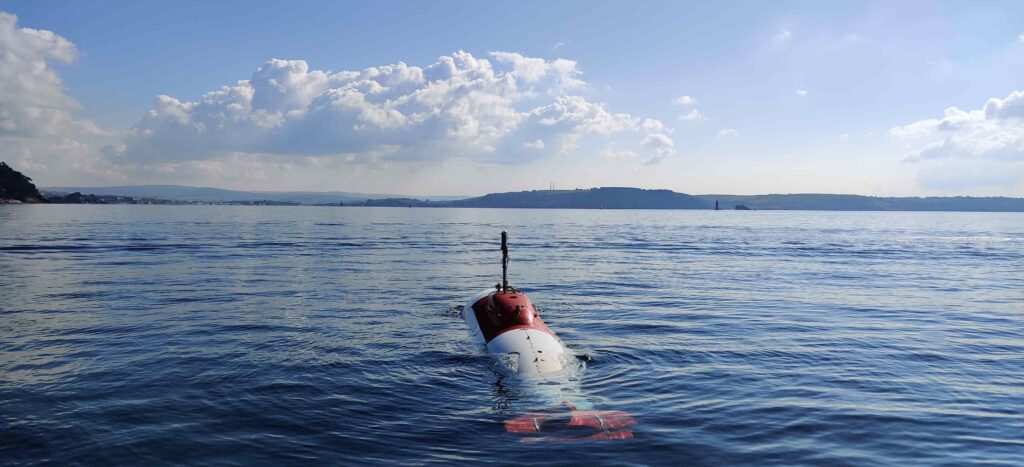
The same goes for an AUV – it’s important that the payload is not only high quality (such as a multi-Aperture sonar, high quality camera or laser), but its navigation, communications and tracking systems are also high quality and precise allowing it to go where it’s supposed to and find its way back. Ideally, you want both the sensors and platforms to be built using modular designs – this allows for smoother integration of the sensors and makes future upgrades more feasible.
In other cases, a designed platform isn’t even needed. For example, the dropping or strategic placement of underwater sensors will provide you with an acoustic range that can detect an adversary’s AUV, submarine or underwater vehicle.”
Joining Forcys
Sean recently joined Forcys and is spearheading our Australian efforts, “I think Australia and its UK and US partners have a lot to gain from AUKUS and the technological transfer of capabilities that already exist. The DSR specifically speaks about the Pillar 2 ‘Trilateral delivery’ or joint R&D of enhanced capabilities, this collaboration with companies like Forcys will help provide the ability for all three nations to move forward with information sharing and technology cooperation. I’m especially excited about the opportunities for Forcys with AUKUS Pillar 2 undersea warfare – from the underwater acoustic communication network in Smart Sound Plymouth from our Technology Partners Sonardyne, the world leading intruder detection sonars from Wavefront already deployed with navies around the globe and to our AUV payloads. These are just some of the amazing proven capabilities that Forcys offer.”
Want to find out more or speak to Sean Leydon? Please get in touch.
The Watch recently discussed the Royal Navy’s littoral strike capability with Justin Hains MBE, a former Royal Navy officer and current Business Development Manager for Forcys. The Royal Navy has a significant capability to strike land targets thanks to its two Queen Elizabeth-class aircraft carriers, which are together capable of carrying up to 80 aircraft, including F-35B Lightning II Joint Strike Fighters. The carriers are also supported by a range of other vessels, including destroyers, frigates, logistic support ships and submarines.
Hains believes that the Royal Navy has an advanced littoral strike capability. He said: “You need to understand that the capability is absolutely there. The core of power projection is the two carriers and then everything builds from them. There’s a submarine capability to defend the carrier, and there’s a hydrographic and mine countermeasures capability to enable the carrier freedom of navigation so that the carriers can get to where they need to operate. The escorts provide a defensive screen and an ability to distribute the force in smaller packages as required. This capability has been many years in the planning and recent geopolitical events, if anything, further validate the Royal Navy’s approach”.
In addition to the Queen Elizabeth-class carriers, the Royal Navy is also investing in a range of other capabilities that will support littoral strike operations. These include:
- The Type 26 frigate, which will be equipped with a range of anti-ship and land-attack missiles.
- The Type 31 frigate, which will be a smaller, more affordable frigate that will be well-suited to littoral operations.
- The Littoral Response Group, which will provide an amphibious option, either in concert with Carrier Strike or separately.
Innovation where it is needed
Hains points out: “These strategic decisions ensure that the Royal Navy has a strong littoral strike capability for many years to come. However, the renewed threat of near-peer adversaries is more real than ever before. To meet this challenge, the Royal Navy is going to need to adapt its capabilities and strategies. The focus on littoral strike is a big step in the right direction. The navy now needs to invest in new technologies to complement its existing assets. Investment in uncrewed systems increases our surveillance range and improves our strike capability. Techniques like machine learning (ML) will be used to automate tasks and make decisions in real time.” But it’s not just technology. “In addition to investing in new technologies, the Royal Navy will also need to adapt its operational concepts. The navy will need to be able to operate more flexibly and at higher tempo. It will need to adapt to the foe and generate a response by selecting the right mix. At times the navy will operate in smaller, more distributed units. At times it will resort to conventional weaponry. At all times the Royal Navy will need to work closer with its allies and partners”.
According to Hains, if navies are going to defeat the emergent threats, then they need to be successful in fielding new technologies: “We need to deliver innovative solutions to put in front of the navy in a very rapid way. If you ask me, I think we’re getting there but to be honest the procurement process is still playing catch-up. Many initiatives are supporting rapid innovation and encouraging war fighters to be involved in their development from early stages. At Forcys, we are clutched into all of that, and we are part of the ongoing discussion. However, we recognise that defence as a whole will always have a problem with annualised budgets. These make it very difficult to launch multi-year projects. I know this is being worked on. And I accept that the commercial teams in front line commands can only change as fast as the next level allows them, but we need to feed back to defence to help them be as flexible in procuring innovation as they are when it comes to field it. You are going to see industry and defence working together and needing to be ready to take calculated risks.”
Dominance in the underwater domain will be critical to enable the littoral strike capability. As Hains explains: “It all comes down to the use of use of asymmetric force. You’re trying to get the most effect for the least resource you apply your strengths against your enemy’s weaknesses. In the underwater domain this arms race is taking place against a backdrop where the sensors and effectors are going to be required to operate at far higher speed and more integrated than ever before. It’s not going to be good enough to take a position, course and a speed from one sensor and plug those numbers into a weapon to then release it. All of this information has to be exchanged electronically and very quickly, because underwater vehicles, especially weapon systems, are going to get faster; so response times are going to have come down.”
The Importance of Underwater Networks
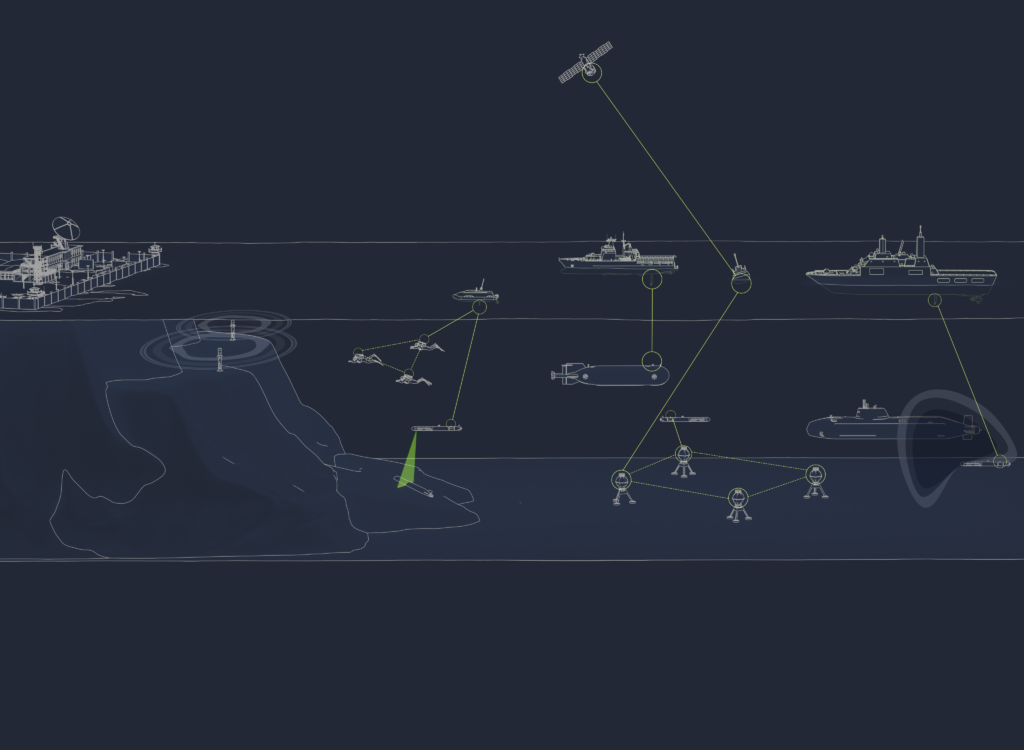
As Hains noted in the interview, an effective underwater network is essential for the Royal Navy to be able to conduct littoral strike operations. “An underwater network would allow the navy to share information and coordinate actions between its unmanned systems and manned ships. This would allow the navy to operate more effectively and efficiently and would give it a significant advantage over its adversaries.”
One year on
It’s been one year since Hains joined the Forcys project, he was here while the launch was being planned and participated on the launch in UDT 2022 in Rotterdam. How has it been? “I’m still absolutely thrilled to be part of something that feels really fresh, really exciting, and exactly what defence is looking for. It also feels good now that we’re getting more people in, and our expansion into the US and Australia is absolutely essential as we look towards AUKUS and other opportunities. I think there are so many synergies wrapped around AUKUS that we’re absolutely in the right place for it. I really feel like we’ve got the right model and the right recipe for success at just the right time. Especially when AUKUS rightly spins off underwater networks, defensive capabilities, and mine countermeasures capability to support anti-submarine warfare across shallow waters and confined spaces. I’m still amazed by the positive reaction I get from everyone when I explain why we created Forcys and what Forcys can offer. And I think if anything, we just need to go faster. That ability to really operate as that single point of contact will help us to accelerate again in terms of what we’re actually able to take on.”
Want to dominate the deep? Get in touch with our team.
(Featured Image of HMS Queen Elizabeth in Gibraltar by David Jenkins – InfoGibraltar under a Creative Commons Attribution 2.0 Generic license.)
In the final installment of the DiveTrack series of blogs, retired Royal Navy Cdr Justin Hains MBE focuses on safety and future use cases. If you want to learn more about our technology partner Sonardyne‘s latest product remember to get in touch with our team.
If you haven’t yet read the previous blog articles in the series then follow this link.
An extra layer of safety
Divers are very well trained, but humans make mistakes. Errors made in diving can have fatal consequences. With DiveTrack the supervisor is an extra layer of diving safety: they receive the alarms the diving set generates at the same time as the diver, they can see cylinder contents nearing minimum safe levels or in the case of rebreathers, if the gas the diver is breathing is unsafe. The supervisor can either change the plan or abort the dive before the situation becomes life-threatening. DiveTrack provides an additional layer to the equipment safety case and to the risk mitigation in place for the dive.
The ability to send automated and pre-formatted messages to and from the dive computer caps the safety enhancements delivered by DiveTrack. The basics include “Diver well” and “Reached target” while emergency calls include “I need assistance”, which provides a direction and range to all other divers on the net. The potential of the data transmission is only limited by the sensor routed to the computer: equipment parameters (gas compositions and CO2 scrubber monitoring) and biometrics (heart rate, respiration rate, core temperature) are all possible now if required by the customer.
Future proof
The DiveTrack system has capacity for future upgrades. The system is running at a fraction of its maximum capacity. This makes DiveTrack a safe choice for customers who are investigating biometric monitoring, experimental diving, performance enhancement and operational advantage or even for the key requirement of all diving equipment: safety.
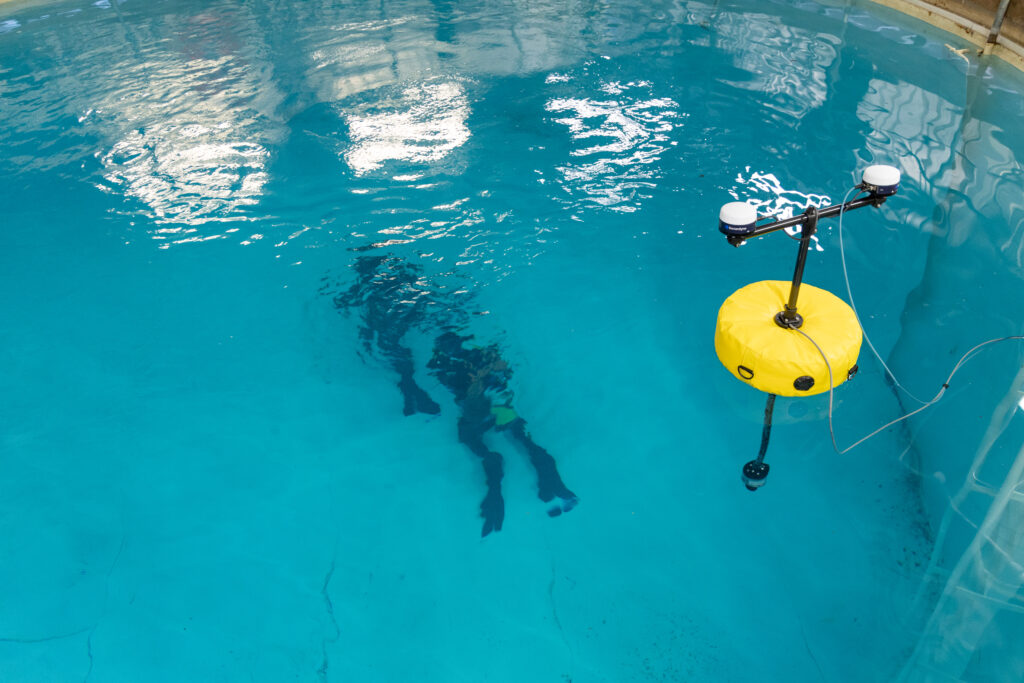
DiveTrack is what I needed off Portland all those years ago. It enhances resilience and safety. The mission is more likely to succeed. This is proven technology adapted to a diving requirement from our Technology Partner Sonardyne: acknowledged and trusted experts in underwater acoustic tracking and communications. It has ample headroom for additional data exchange requirements in future. It is compact, neutrally buoyant in sea water, easy to use and reliable. It has been successfully integrated and demonstrated with closed circuit rebreathers and open circuit equipment.
Contact us today to discuss your requirements.
Forcys brings together leading technologies, offering a comprehensive naval and subsea capability to the United States Navy and its supply chain.
The undersea battlespace is becoming increasingly contested. In response to this threat, the United States and its allies are developing autonomous and remotely operated platforms that deliver enhanced mission capability, increased capacity, and improved lethality. Forcys has appointed Captain Christian Haugen, USN (Ret.), to lead business development efforts in the United States in support of this evolving mission.
Backed by over fifty years of experience, Forcys offers the global maritime naval sector remote, autonomous, and networked control capabilities delivering integrated situational awareness to customers in the underwater domain.
Covering a range of maritime operations including asset protection, littoral strike, mine warfare, submarine rescue, and submarine and anti-submarine warfare, Forcys seeks to transform the underwater domain by enabling increasingly distributed and automated operations. This is made possible by integrating and bringing to market world-changing solutions from leading technology partners Chelsea Technologies, EIVA, Sonardyne, Voyis, and Wavefront Systems.
Commenting on Christian Haugen’s appointment, Ioseba Tena, Commercial Director of Forcys, said: ‘The United States has led the development and introduction into service of uncrewed underwater and surface vehicles over the last two decades. Their efforts have benefited all of us. They achieved this by working closely with industry and selecting best-of-breed capability. We want to play our part and Chris’ appointment is part of a long-term commitment to develop solutions that will accelerate the introduction of more effective systems.’
Christian Haugen, Business Development Manager for North America, explains: ‘I am really looking forward to engaging with our existing customer base and eager to explore ways in which we may continue to add value. Beyond that, I am keen to explore ways in which we can closely integrate solutions from our technology partners to develop innovative capability to enhance the situational awareness and effectiveness of the Navy’s fleet of unmanned systems.” Forcys will be supporting our technology partner, Sonardyne Inc, at Sea-Air-Space 2023 in National Harbor, Maryland. If you’d like to arrange a meeting with the Forcys team, please get in touch.
In the second of the DiveTrack series of blogs, retired Royal Navy Cdr Justin Hains MBE illustrates how divers can enhance their current operations through the intelligent use of underwater communications and tracking. Read on to find out how diving supervisors can be kept in the know with our technology partner Sonardyne‘s latest product.
If you haven’t yet read the first blog in the series then follow this link.
Enhanced Situational Awareness
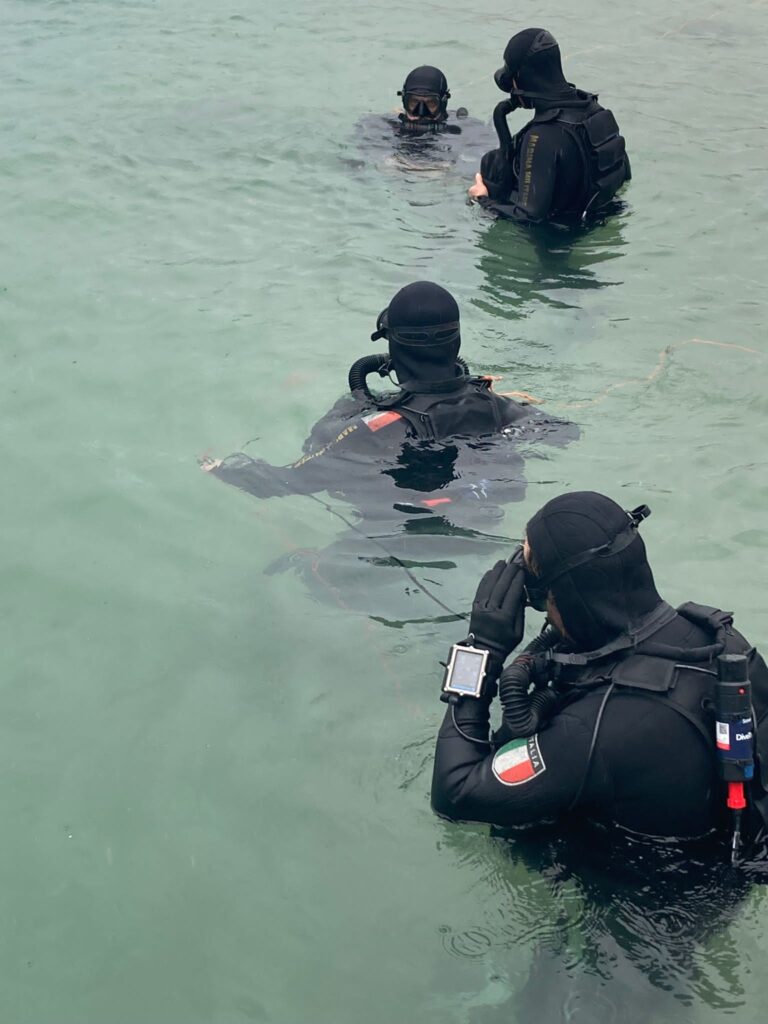
DiveTrack from our technology partner Sonardyne shows the supervisor where the divers are by range, bearing and depth. This positional information can be georeferenced by GPS and displayed on a chart layer. The supervisor can also be provided near real-time cylinder pressures, equipment alarms or alerts. Future features will include gas analysis of the breathing loop (PPO2 or CO2 content for example) and biometric data. Better information supports better decision making.
The diver’s positions are constantly updated. This has two operational advantages: first, the divers know where they are with a high degree of accuracy without the need to surface – they remain covert. Second, the divers arrive on target having spent the minimum time in the water, in better shape for the assault or recce. Covert beach surveys can be completed accurately without the need for a floating GPS antenna attached to the diver or constantly resurfacing to ensure the snag-line survey is correctly positioned – no easy task in current and swell.
The supervisor can also see when a diver is using gas at an unexpectedly high rate that endangers the mission. They can see if a diver is ascending or worse descending unexpectedly: a significant danger on enriched oxygen equipment. Because the supervisor can implement changes to the plan based on enhanced situational awareness the mission is more likely to succeed. If the team can react to unforeseen events efficiently, rather than working through pre-planned responses without any more detail, the team is one step closer to the ‘hyper-enabled operators’ envisaged by United States Special Operations Command.
The result of improved situational awareness is more efficient insertion and extraction and greater confidence in the accuracy of any data collected.
Tactical Flexibility
“No plan stands first contact with the enemy” – or, in my experience, salt water. A covert dive to an offshore installation or a long-range insertion for beach reconnaissance both suffer from the same problem: there is no way of recalling the divers covertly without increased risk of detection on the surface. DiveTrack provides reliable through water communication via a selection of pre-formatted messages between supervisor and divers. In extremis, this could be an “abort mission” sent to all divers followed by a “return home” command which triggers a display of bearing and range information on the Shearwater Petrel dive computers and optional head up displays that will home them back to the dive boat, even as it moves.
But aborting the dive is the last resort. Far better is managing the mission dynamically. If the boat must move due to an enemy patrol, the beach recce team can be informed instantly. A “go to [new] waypoint” command can be sent by the supervisor at any time.
The system combines the accuracy of GPS with proven underwater acoustic ranging technology. But DiveTrack can still function in a GPS-denied battlespace. While the errors in navigation will increase over time, the relative positions of the dive boat and divers will remain accurate, and communications are unaffected. The mission can still proceed, reverting partially to previously used methods of visual sightings, but the benefits highlighted: enhanced situational awareness and tactical flexibility remain.
Want to know more?
In my next blog I will focus on the safety aspects of DiveTrack and how it has been built to be future proof.
Forcys brings together leading technologies, offering a comprehensive naval and subsea capability to the Australian defense market
Evolving threats, unlawful maritime claims, military coercion, all these factors are destabilizing the Asia Pacific region and causing many lawful states to reconsider their defense strategies. Australia’s 2020 Defence Strategic Update and the anticipated March 2023 release of Australia’s Defence Strategic Review has brought these issues into sharp focus while demanding growing self-reliance for delivering deterrent effects. Today’s launch of Forcys Australia and the appointment of Sean Leydon as Regional Manager for Asia Pacific, is in direct support to this strategic need.
Backed by over fifty years of experience, Forcys offers the global maritime defense sector, remote, autonomous and networked control capabilities that deliver integrated situational awareness to customers in the underwater domain.
Covering a range of maritime operations including asset protection, littoral strike, mine warfare, submarine rescue, and submarine and anti-submarine warfare, Forcys seeks to transform the underwater domain by enabling increasingly distributed and automated operations. This is made possible by integrating and bringing to market world-changing solutions from leading technology partners Chelsea Technologies, EIVA, Sonardyne, Voyis and Wavefront Systems.
Commenting on the Australia launch, Ioseba Tena, Commercial Director of Forcys, said: ‘I am excited, Australia is taking bold decisions in the underwater domain. There’s been a realization that uncrewed systems take a lot of the risk out of the conflict, they afford higher levels of attrition and deliver higher coverage rates. The sense of urgency is palpable and there is an appetite to work with industry experts to support the transition. We are keen to support a sovereign, sustainable capability.’
Sean Leydon, Regional Manager for Forcys’ Asia Pacific region, explains: ‘Our technology partners already engage with the Australian Government and industry, so our initial focus will be on improving those interactions by providing an in-country presence. However, our ambition doesn’t stop there, we are actively recruiting engineers to help support our existing customers and in time to develop sovereign capability. I’m looking forward to help make a difference.’
Forcys is exhibiting at the NAVDEX exhibition in the United Arab Emirates between 20th and 24th February 2023 at stand A-029. If you’d like to arrange a meeting with the Forcys team, please get in touch.
In Brief
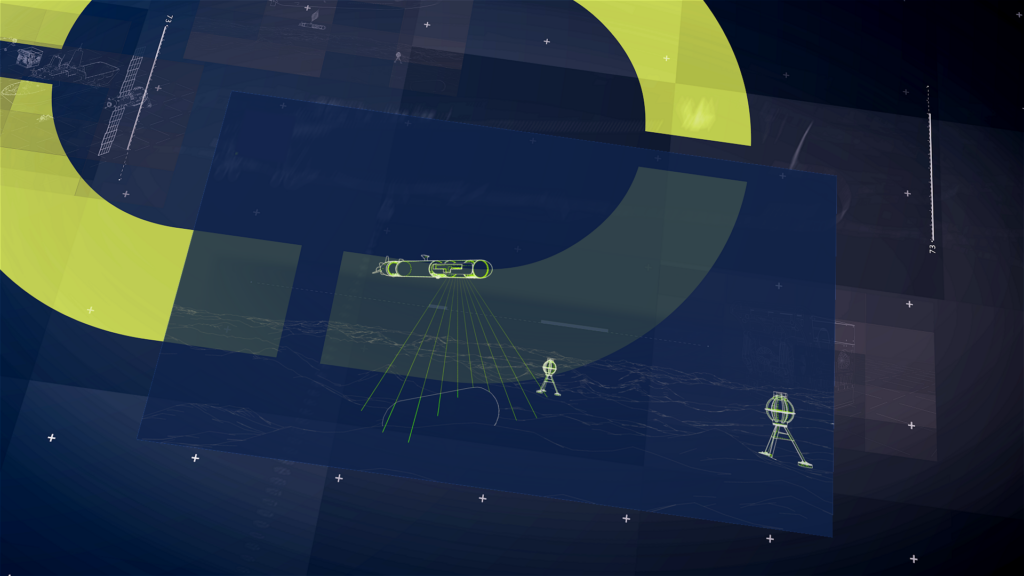
In this project, the University of Tasmania evaluated the capabilities of optical-based sensors when using an AUV (Autonomous Underwater Vehicle) to dynamically survey large areas and identify specific objects of interest within environments. Based on the performance of the systems and the overall process, recommendations will be made to Defence Science and Technology for using this technique when trying to identify a mine-like object (MLO) underwater.
The challenge
Wide-area sensors, like sonar, can be used for mine detection, but don’t always offer enough details for the identification stage. Meaning that historically, underwater mine identification has been done by deploying divers or remotely operated vehicles.
The solution
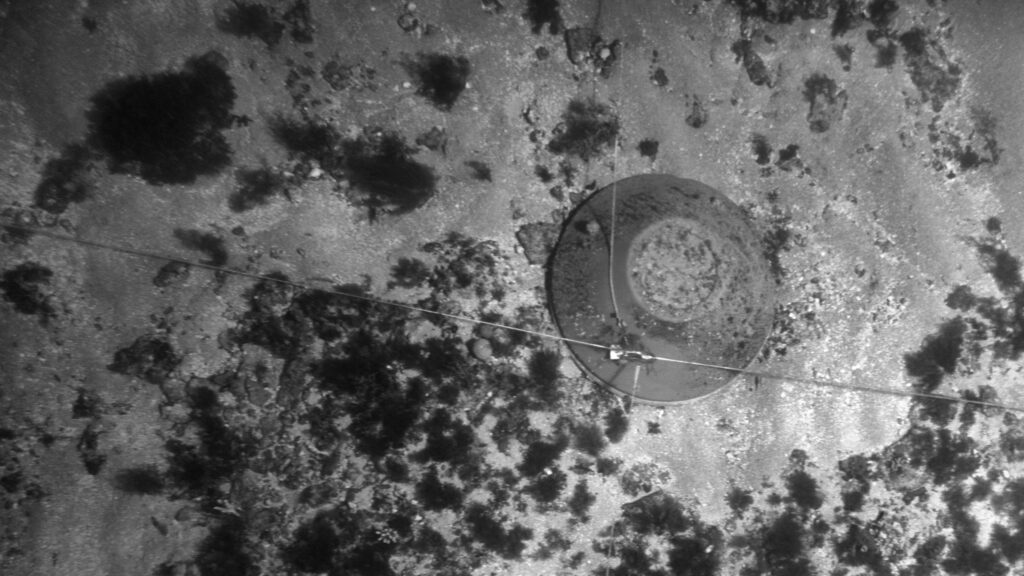
Our technology partner, Voyis, develop high-resolution optical systems capable of rendering laser point cloud data and capturing 4k stills images. These provide a complete visual understanding of mine-like objects (MLOs), improving mission lethality, and reducing risk by limiting diver deployments in the minefield.
The Insight Pro laser scanner, the stills camera Observer Pro, and the Nova LED panel were bottom mounted in the University of Tasmania’s ISE Explorer AUV . All data was collected and saved to the onboard storage of the sensors; image data was processed in real-time. The AUV travelled at an altitude between 1.5-15m while the laser and stills system collected data, operating harmoniously to ensure laser and stills data sets of the same targets were collected.
The result
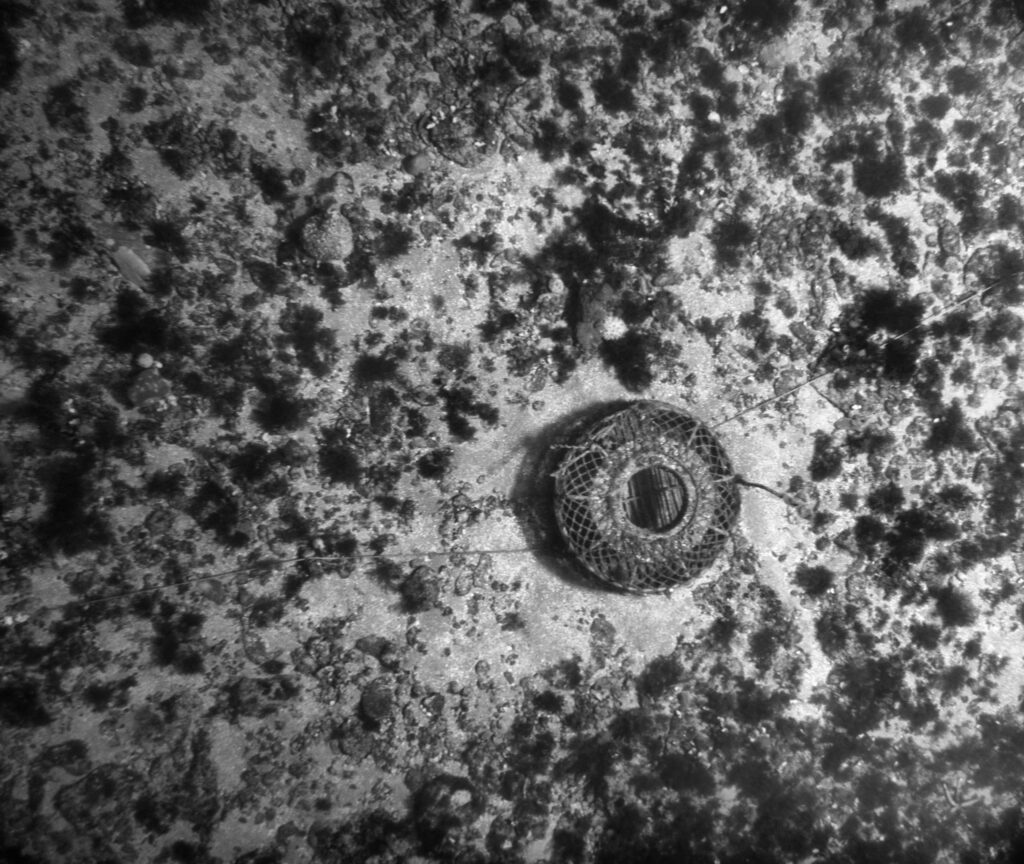
Voyis sensors were easily integrated into the Explorer AUV and generated crisp 4K images. The data collected provided enough details for the easy identification of objects, allowing users to distinguish between mines and similar objects found underwater.
The crisp stills images are enhanced in real time, for complete situational awareness in warfare operations. Images are corrected to remove all aspects of the water medium – color, lighting, and distortions. The results provide a significant improvement in relation to conventional optical systems typically mounted on AUVs. From now AUVs can potentially be used to build wide area high-resolution maps of the subsea environment.
Contact us if you would like to reach out to our experts.