

The autonomous underwater threat: Why AUVs and UUVs are reshaping maritime security
Autonomous and unmanned underwater vehicles have, for many years, been the preserve of specialist operators such as oceanographic research institutions, offshore energy companies conducting pipeline surveys and naval forces with the resources to develop and operate complex underwater systems. That era is ending.
Advances in battery technology, miniaturised sensors, inertial navigation and onboard computing have converged to produce a generation of capable and affordable AUVs and UUVs that are now accessible to a far wider range of operators. The same technology that allows a research institution to survey a seabed autonomously, or an energy company to inspect a riser without deploying a dive team, can also be adapted for reconnaissance, surveillance or direct action against underwater infrastructure.
This is not a theoretical concern. It is an observable trend.
A Changing Threat Landscape
Below the state level, the availability of commercial AUV technology has lowered the barrier to entry considerably. Systems capable of extended autonomous operation, in some cases over distances of tens of kilometres, are available commercially. Adapting such systems for malicious purposes requires less technical expertise than might be assumed. The knowledge and components are, in many cases, openly accessible.
For port authorities and naval base commanders, this creates a materially different threat picture from the one that underpinned most current security infrastructure. Perimeter monitoring focused on surface vessels and personnel access does not address an approach made at depth. Camera systems and patrol craft provide no coverage of the underwater environment. A determined adversary using a commercially available AUV launched from a vessel outside a security zone could approach a critical underwater asset with a reasonable expectation of going undetected.
What Makes AUVs and UUVs Particularly Challenging
Their acoustic signature is typically low. Unlike surface vessels, which generate noise through propulsion, wake and machinery, small AUVs can be acoustically discreet, particularly at slow speeds. Detecting them requires dedicated underwater acoustic monitoring rather than the surface focused sensors that form the basis of most current maritime security systems.
They operate independently of real time human control. Unlike a remotely operated vehicle that requires a continuous tether or communications link, an AUV can be pre programmed and launched without any ongoing operator involvement. This means that even if a launch vessel is identified and challenged, the vehicle may already be on its way to its objective.
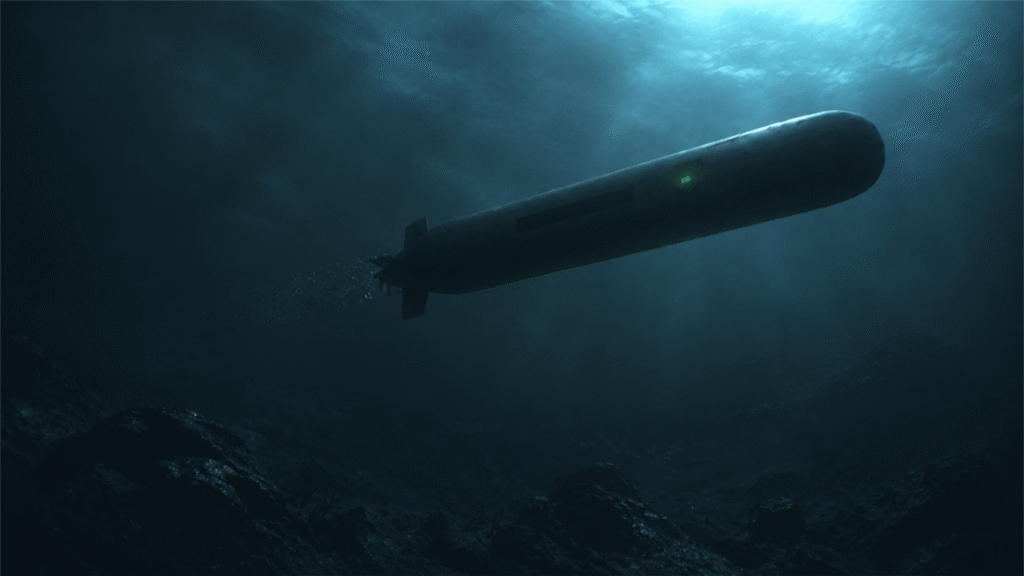
Their size makes visual detection extremely difficult. A small AUV may be no larger than a torpedo, and in the low visibility conditions typical of port approaches, estuaries and offshore environments, visual detection by divers or underwater cameras is unreliable at any meaningful range.
Finally, the range of potential payloads and objectives is broad. An autonomous underwater system might be tasked with reconnaissance, mapping the underwater profile of a naval vessel or the layout of an underwater pipeline, or it might be used to place a device, disrupt a sensor or cause direct physical damage. The ambiguity of intent compounds the detection challenge because an approaching AUV does not announce its purpose.
The Consequences of an Undetected Approach
Security professionals often observe that the value of a security system is most clearly demonstrated by the consequences of its absence. In the underwater domain, those consequences can be severe.
An undetected AUV conducting reconnaissance of a naval facility provides an adversary with intelligence that could inform a subsequent, more damaging operation. An undetected AUV placing a device on the hull of a high value vessel could result in the loss of that asset. An undetected UUV tasked with disrupting a subsea cable or pipeline could cause disruption at national scale before the source of the fault is even identified. In each case, the security failure is not the moment of damage. It is the absence of awareness that allowed the threat to reach its objective uncontested.
The challenge is compounded by attribution. When an underwater asset is damaged, establishing what caused that damage, whether mechanical failure, environmental factors or a deliberate act, can be a lengthy and technically complex process. Where no monitoring data exists, that determination becomes significantly harder. The absence of an underwater picture does not just create a security vulnerability. It undermines the ability to respond and recover.
What Detection Requires in Practice
Addressing the AUV and UUV threat requires capabilities that are genuinely suited to the detection challenge. Acoustic detection is the primary means by which underwater autonomous systems can be identified at operationally useful ranges.
Range matters. An alert generated when a threat is fifty metres from a critical asset provides very little time for response. Effective underwater security requires detection at ranges that allow a security team to evaluate the contact, decide on a course of action and deploy a response before the threat reaches its objective.
The quality of detections matters too. A system that generates an alert for every acoustic contact, whether marine life, passing shipping or environmental noise, will quickly overwhelm an operator and become counterproductive. The ability to distinguish between threat categories and prioritise alerts is what separates a monitoring system from a genuine decision support tool.
Combining passive and active sensing to counter the UUV threat
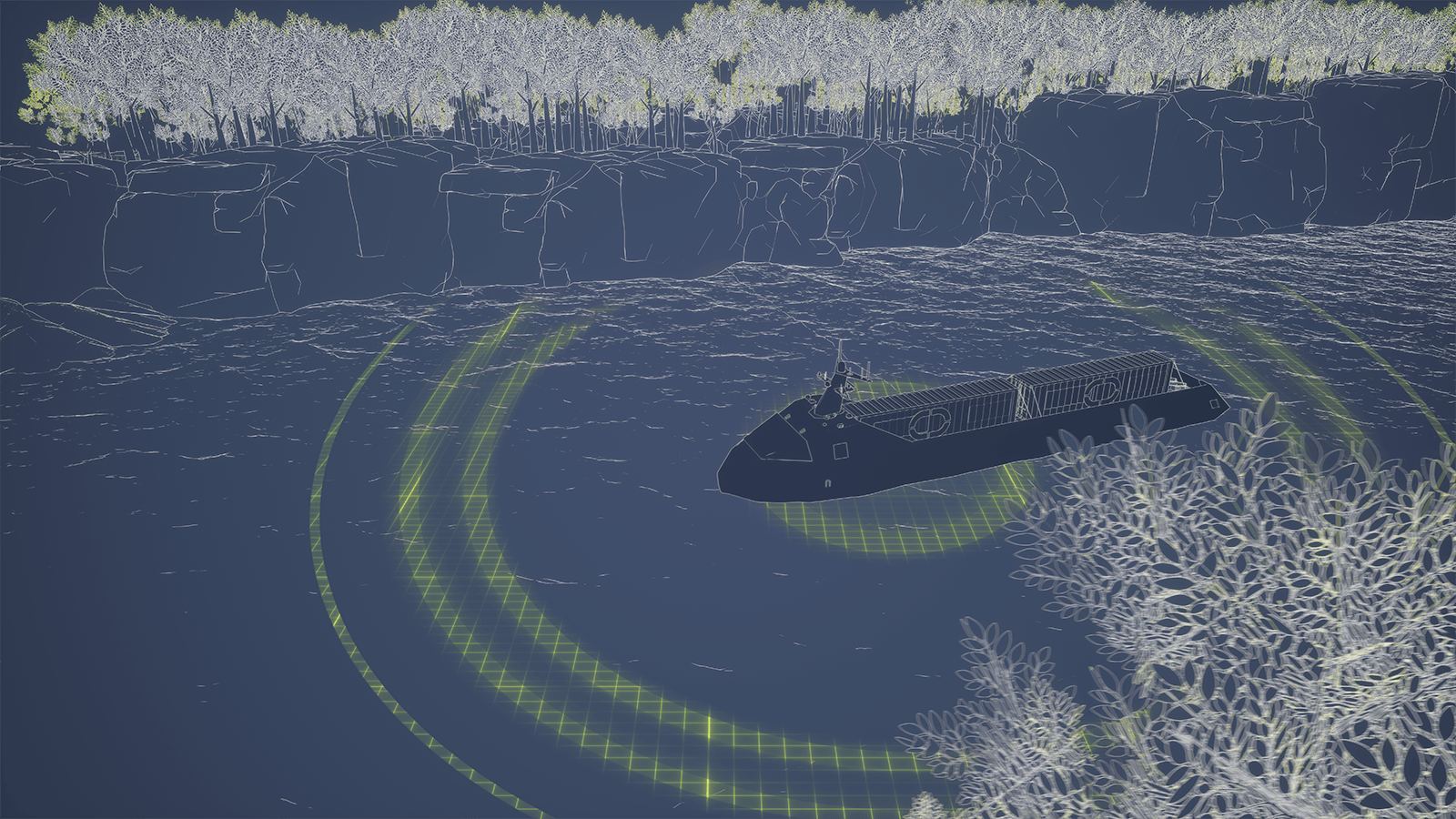
Our Sentinel IDS has been designed with these operational requirements in mind. Its underwater acoustic monitoring architecture provides persistent coverage of designated areas, with automated classification capabilities intended to reduce false alert rates and focus operator attention on genuine contacts of concern.
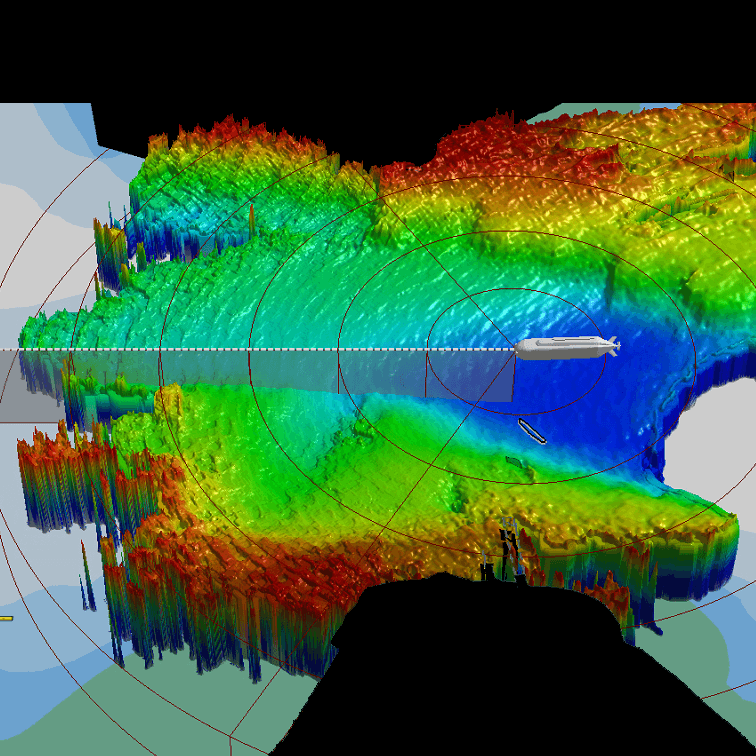
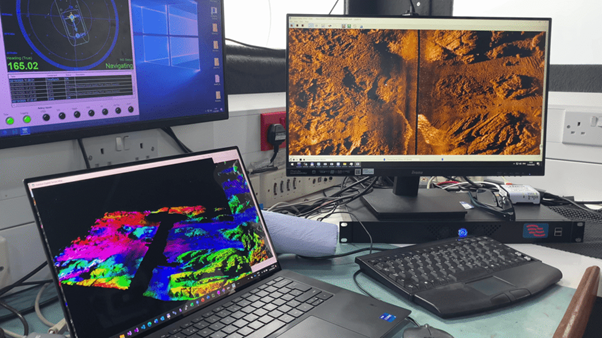
This is done by uniquely combining both active and passive processing using its patented SInAPS® technology (Simultaneous In-band Active and Passive Sonar) allowing the passive emissions from the target to help detection and tracking when active tracking may not be possible. Furthermore, this also helps with classification of targets (for example marine life do not generally emit sound, while an UUV provides constant propeller noise). Both types are tracked and displayed in an intuitive way which helps the operator associate the tracks and make the correct tactical decisions.
Its modular design reflects the reality that not all operators require, or can sustain, a fixed permanent installation. The ability to establish, adapt and redeploy the system supports both permanent facility protection and the shorter duration operational requirements of expeditionary forces and temporarily elevated security postures.
The goal is straightforward: to ensure that when an autonomous underwater system approaches a protected asset, it does not do so undetected. In an environment where the technology to mount such an approach is becoming increasingly accessible, that assurance is moving from a specialist military requirement to a baseline expectation for any organisation responsible for the security of critical underwater infrastructure. The autonomous underwater threat will not diminish. The organisations that recognise this early and establish the awareness to match it will be considerably better placed than those that do not.

Share On