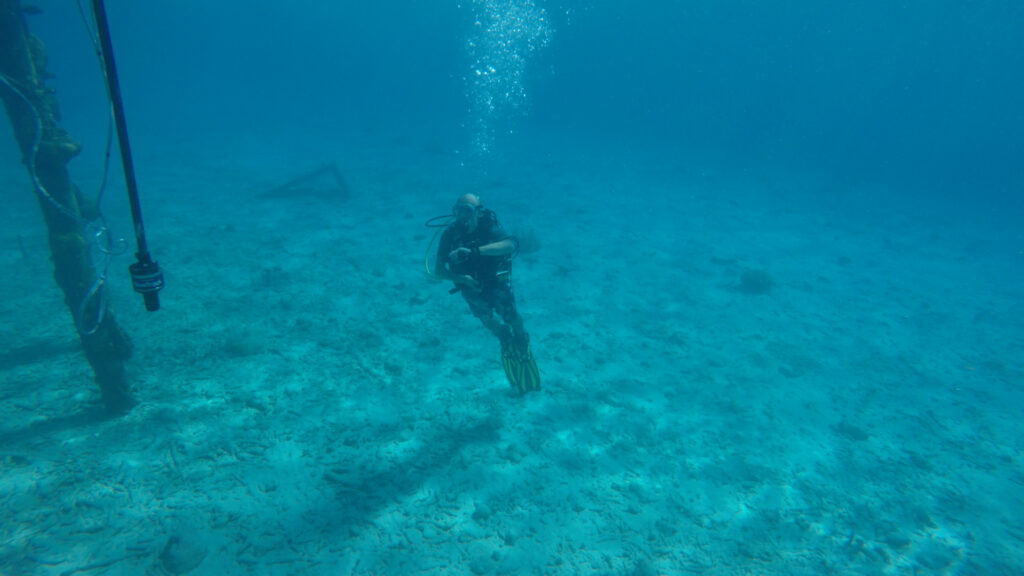
To meet the growing complexity of modern mine countermeasure missions, Forcys and Eelume have joined forces to deliver a new class of agile autonomous capability. Pairing Eelume’s manoeuvrable autonomous underwater vehicle (AUV) platform with Forcys’ integrated sonar and optical systems from Wavefront Systems and Voyis, will enables navies to locate, assess and confirm underwater threats with greater certainty across complex seabed terrain.
Together, these technologies mark a major advance in autonomous and networked mine countermeasure operations, allowing smaller and smarter systems to deliver the same certainty and coverage once limited to large, manned vessels.
Clearing and securing coastal waters, harbours and confined seabed areas remains one of the most difficult tasks faced by navies today. Conventional AUVs are optimised either for endurance or manoeuvrability, rarely both. In shallow or topographically complex terrain, these limitations create data blind spots, forcing navies to rely on slower and less certain minesweeping techniques.
Thomas Nygaard, CEO at Eelume, said, “Modern mines hide in the most challenging seabed environments — among rocks, slopes and narrow channels that traditional AUVs can’t fully access. Eelume S combines detection, classification and identification in one system, eliminating the need for ROV operations and reducing time-consuming mine sweeping through its manoeuvrability, advanced sensor suite and in-mission processing capabilities. This keeps personnel and vessels out of the minefield and makes MCM safer, faster and more efficient.”

The challenge lay in developing a compact, versatile platform that could deliver both wide-area detection and detailed inspection in any seabed environment, from open waters to confined littoral zones, without compromising range or endurance.
Forcys acts as the integrator of a powerful ecosystem of subsea technologies, bringing together proven innovations from across its group to deliver fully optimised solutions for the end user.
Through the integration of Wavefront Systems’ multi-aperture sonar Solstice and Voyis’ optical imaging systems, Forcys will enable Eelume S to achieve both the wide-area efficiency and close-range fidelity essential to modern MCM missions.
- Solstice delivers image quality close to synthetic aperture sonar (SAS) but at roughly one-tenth of the data burden and with substantially lower power demand. Its tolerance to platform motion makes it ideal for shallow-water and high-relief environments, requiring frequent manoeuvres, where SAS systems are less effective.
- Voyis Observer Imaging System provides high-resolution stills with true-colour representation, enabling rapid visual identification of potential threats once detected.
By acting as a single integration partner, Forcys ensures the optimal synergy between vehicle, sonar and camera systems, streamlining deployment and simplifying logistics for naval customers.
The Solution
The Eelume S platform introduces a flexible, bio-inspired propulsion system featuring dual counter-rotating propellers mounted on an articulated tail. This design grants independent control of pitch, yaw, and roll, allowing the vehicle to move fluidly around obstacles, maintain stability close to the seabed, and capture detailed sensor data in environments inaccessible to conventional AUVs.
Equipped with Forcys’ integrated sensor suite, Eelume S can perform wide-area sonar sweeps to detect and classify objects before transitioning seamlessly to close-range optical inspection for identification. The system’s compact size makes it easy to deploy from uncrewed surface vessels (USVs) for extended, fully remote multi-vehicle operations.
In trials across Norway’s complex coastal terrain, the platform demonstrated consistent area coverage and the ability to deliver actionable, high-resolution data at a fraction of the bandwidth normally required for SAS missions.
Thomas Nygaard, “We outperform traditional AUVs, not just on complex bathymetry, but also on flat seabeds because we can operate closer to the seabed and capture higher-quality images. With the Solstice MAS sonar integrated we get the best of both worlds, combining agile movement with the data quality needed to act quickly on targets.”
The Result
The integration of Eelume S with Forcys’ advanced sonar and imaging systems represents a major evolution in mine countermeasure capability.
The combined system enables Detection, Classification and Identification (DCI) from a single AUV, reducing mission time and complexity while increasing operational certainty.
The solution delivers:
- Greater operational certainty: Precise detection and identification even in confined, high-relief seabeds.
- Enhanced safety and efficiency: Reduced reliance on crewed minesweeping, minimising risk to personnel.
- Scalable autonomy: Compatibility with USVs and networked MCM concepts for coordinated multi-vehicle operations.
- Reduced data burden: Actionable information at lower bandwidth and power consumption, enabling faster mission processing.
For countries like the UK, where complex littoral zones, busy ports and vital offshore infrastructure demand reliable protection, this capability provides an agile and interoperable tool that enhances both national and NATO defence readiness.
Justin Hains, Forcys Business Development Manager, commented; “This collaboration with Eelume demonstrates how Forcys is enabling navies forces like the Royal Navy to operate more effectively in challenging environments previousy considered unhuntable. The integration of Wavefront Systems MAS and Voyis imaging on the Eelume AUV delivers detection, classification and identification from a single platform, a capability proven in Norway’s fjords where traditional AUVs fail due to complex bathymetry. For UK missions at home and deployed, this means faster, safer and more reliable coverage across critical littoral zones.”


By bridging innovation and integration, Forcys and Eelume are transforming how the world’s navies see, understand, and secure the underwater domain.
Forcys and its technology partners demonstrated world-class undersea defence capabilities at this year’s BlueTIDE Challenge and Technology Showcase, held at the Naval Undersea Warfare Center Newport Division and Sail Newport marina. The team secured two major awards, underscoring Forcys’ leadership in protecting critical undersea infrastructure.
In the technical challenge, Sentinel Intruder Detection Sonar won the top prize in the Sensor category, taking home USD 50,000 and industry recognition for its performance in live conditions. The system competed successfully against 15 rival technologies and showcased the potential of D-SWAAT, a new active tracking mode designed to extend Sentinel’s range and effectiveness.
At the concurrent technology exhibition, Forcys partnered with Voyis, EIVA and VideoRay to deliver a live Visual Simultaneous Localisation and Mapping demonstration. The showcase impressed judges and attendees, earning the prize for Best In-Water Demonstration.
The event brought together 20 companies to a live competition and more than 40 exhibitors from across the undersea domain, attracting over 600 registered visitors. The outcome highlights how Forcys’ integrated technologies, ranging from advanced sonar to vision-based mapping, are enabling navies and infrastructure operators to strengthen security and resilience beneath the surface.
“BlueTIDE is about pushing the boundaries of undersea innovation in real-world scenarios. Winning in both the competitive challenge and the demonstration showcase reflects not just the capability of Sentinel and VSLAM, but also the power of collaboration across our partner ecosystem. It was a true team effort and a proud moment for everyone involved.”
Chris Haugen, Business Development, Forcys Inc. (CAPT, USN Ret.)

The Indo Pacific International Maritime Exposition is the region’s premier commercial maritime and naval defence exposition, connecting Australian and international defence, industry, government, academia and technology leaders, in the national interest. The exhibition is held from the 4th to the 6th of November.
At Forcys, we understand that modern maritime security demands more than just sophisticated sensors or autonomous vehicles – it requires seamless integration of cutting-edge technology. This is where the combined expertise of our technology partners comes into play. The capabilities of EIVA’s ViperFish, alongside advanced solutions from Sonardyne, and Wavefront Systems are reshaping how subsea threats are monitored and managed, ensuring that the maritime defence community has the tools needed for effective real-time operations.
ViperFish is an all-in-one remotely operated towed vehicle (ROTV) designed for high-resolution data collection in autonomous operations. At Forcys we see the integration of this product as a significant step forward in autonomous operations. Designed for seabed imaging and geophysical surveys, ViperFish performs these tasks with remarkable precision, particularly and can even be paired with unmanned surface vessels (USVs). This opens up new possibilities for autonomous operations in complex underwater environments, enhancing mission safety, efficiency and data accuracy.
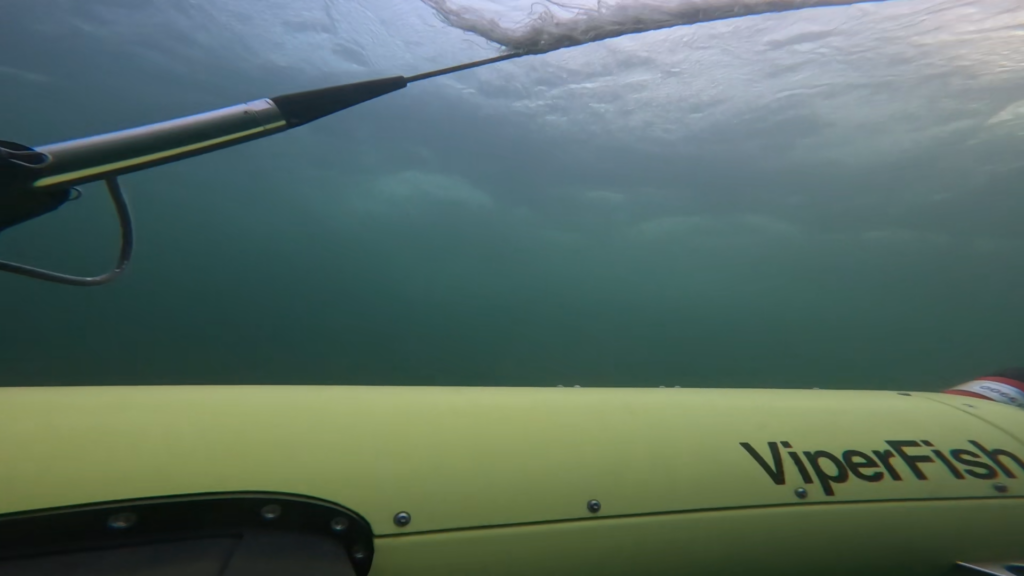
By combining this ROTV with positioning systems, sonar technology and EIVA’s NaviSuite survey software, we deliver a powerful, integrated solution that supports critical defence missions. ViperFish’s ability to automatically maintain a set height above the seabed makes it an invaluable tool for mine countermeasures, UXO (unexploded ordnance) surveys, and rapid environmental assessments.
“Forcys leverages Covelya Group partnerships to deliver solutions that provide capabilities beyond the sum of their individual components,” says Antonio Belfiore, Senior Sales Manager at Forcys. “Additionally, the combined research and development expertise across our group of companies enables Forcys to rapidly adapt to emerging threats and evolving mission requirements. This knowhow was instrumental in the development of ViperFish. Designed to be the tool of choice for mine-hunting across the littoral and in riverine environments, Viperfish is also easy to use and provides your team actionable data in real-time.”
In the context of mine warfare, these integrated solutions are revolutionising the way threat detection is carried out. By relying on autonomous vehicles that can navigate complex underwater environments with precision, defence teams can carry out missions more efficiently and frequently than ever before. The combination of ViperFish’s flexibility and the advanced sensor technologies it brings together enables vast subsea areas to be covered with unprecedented detail.
These advancements not only improve operational efficiency but also provide the necessary foundation for many future maritime and defence security operations.
At Forcys we’re proud to be part of this journey, ensuring that autonomous technology plays a central role in securing your assets.
Read more about our technology partner EIVA.
Discover ViperFish ROTV deployed by ProZero 8m Naval Intelligence USV:
At Forcys, we are committed to delivering innovative underwater technology solutions that are both reliable and cost-effective. A key part of our approach is leveraging Commercial Off-The-Shelf (COTS) software and hardware to meet the complex demands of maritime communications.
COTS solutions provide pre-built, readily available technology designed for seamless integration into existing systems. Unlike bespoke solutions that require extensive customisation and long development cycles, COTS offers a faster, more efficient, and cost-effective alternative for customers looking to enhance their capabilities.
We recently spoke with our Technical Sales Manager, Benn Pickering, who brings extensive experience in sales, business development, and customer relations. He shared his insights into the advantages of COTS technology and its growing impact on underwater operations.
Benn explains, “Rather than invest time and resources into something bespoke, you can take advantage of existing, well-tested solutions. In fact, COTS technology is also known for its reliability, having been built on years of industry-wide testing and refinement. These solutions are designed to withstand the harsh conditions of underwater environments. This is crucial for maritime operations, where equipment must perform flawlessly for extended periods. With COTS, you benefit from tried-and-tested technology that has already been proven in real-world conditions.”
Another key advantage is that with continuous updates and advancements in the commercial sector, COTS solutions evolve to keep pace with emerging technologies, ensuring they remain relevant for years to come. Standardised hardware and software also make repairs and replacements simpler and faster, while user familiarity with these systems reduces training time and support requirements.

“The ability to integrate new advancements without overhauling entire systems is a major advantage,” Benn points out. “It gives you the confidence that your investment will remain valuable as technology progresses.”
“At Forcys, we go beyond simply offering COTS products. Our technology partners are creating an ecosystem of compatible technologies that work seamlessly together, providing end-to-end solutions without compatibility issues,” Benn shares.
By staying ahead of industry developments, Forcys empowers clients to tackle maritime challenges with confidence and efficiency.
A great example of COTS technology in action is our technology partner Sonardyne’s SPRINT-Nav, an all-in-one subsea navigation instrument that integrates an inertial navigation system (INS), a Doppler velocity log (DVL), and a depth sensor into a single, compact unit.

“SPRINT-Nav is a great example of how COTS can offer high-performance solutions without the costs and complexity of a custom-built system. It is designed to provide robust, long-endurance navigation, making it ideal for AUV and ROV operations. It has already been used extensively in support of offshore underwater operations and has become the navigation system of choice for most large autonomous underwater vehicle manufacturers. A bespoke navigation system takes years to develop, manufacture, and test. At the end of that process, you could still fall short of your goals. With systems like SPRINT-Nav, you can pre-determine the outcome from the data sheet.”
“However, if you are required to meet military standards, leveraging COTS solutions is an excellent strategy. It allows you to begin with a proven, functional product and focus your efforts on ruggedisation. We’d be happy to partner with you to achieve full Military-Off-The-Shelf (MOTS) compliance.”
If you’d like to find out more, please reach out to our team.
Forcys, a global leader in underwater defence technology, and Cubedin, an innovator in modular infrastructure for maritime operations, are proud to announce a strategic partnership to provide rapidly deployable modular MCM solutions. To this end the companies have entered a Memorandum of Understanding (MoU) signed at EURONAVAL 2024 in Paris.
Forcys integrates and brings to the defence market world-changing solutions from leading technology partners Chelsea Technologies, EIVA, Sonardyne, Voyis, and Wavefront Systems. Forcys will harness these capabilities to deliver highly customisable, interoperable, and containerised solutions for complex naval missions.
At the core of this integration is Forcys’ MCM-in-a-box, designed and developed by EIVA. The 20-foot Cube module solution features EIVA’s Remotely Operated Towed Vehicle (ROTV). This versatile system supports a variety of payloads, enabling it to meet Mine Countermeasures (MCM) requirements as well as Rapid Environmental Assessment (REA), and Intelligence, Surveillance, and Reconnaissance (ISR) operations.
Designed with maximum flexibility in mind, the MCM-in-a-box can operate as a standalone system from any vessel of opportunity or military ship, and it is ideally suited to the Cubedin concept. “We are excited to partner with Cubedin and see our MCM-in-a-box solution incorporated into Cubedin’s modular concept,” said Antonio J. Belfiore, Senior Sales Manager EMEIA at Forcys. “This integration will make it easier to incorporate our solution into more complex C2 setups, creating seamless integration opportunities for modular military ships and making our systems readily accessible to our customers.”

Forcys, a global leader in underwater defence technology, and DRASS, a renowned name in the manufacturing of diving systems and underwater vehicles, have signed a Memorandum of Understanding (MoU) aimed at revolutionising underwater operations.
Forcys integrates and brings to the defence market world-changing solutions from leading technology partners Chelsea Technologies, EIVA, Sonardyne, Voyis, and Wavefront Systems. These companies are renowned for their innovative offerings in underwater and maritime operations, making them ideal partners for DRASS.
Luca Biasci, SDV & LUUV Program Manager at DRASS, emphasizes the significance of this collaboration: “DRASS has consistently been at the forefront of technological innovation in the underwater domain. With this partnership, Forcys’ robust portfolio of advanced payload technologies will be integrated with our Large Unmanned Underwater Vehicles (LUUVs), RONDA, expanding our suite of solutions to meet the evolving demands of the underwater sector.”
Under this agreement, Forcys’ advanced underwater vehicle systems and sensor payloads will complement DRASS’ capability to meet the evolving needs of navies.
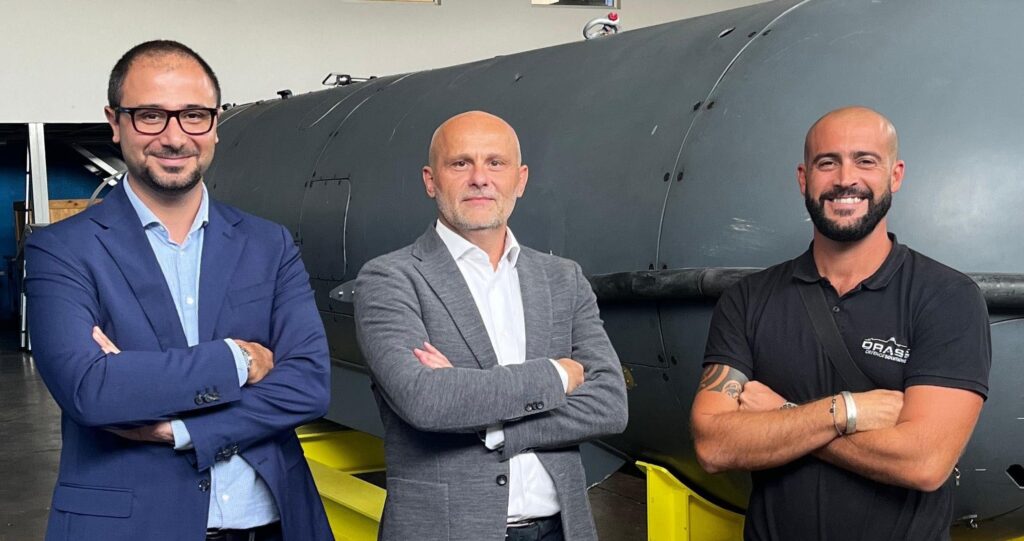
Antonio J. Belfiore, who leads sales in the Europe, Middle East, India, and Africa (EMEIA) region for Forcys, recently visited DRASS headquarters in Livorno, where the final details of the agreement were ironed out.
“We are thrilled to partner with DRASS, a company that shares our commitment to innovation and excellence,” said Antonio J. Belfiore. “This partnership allows us to combine our expertise and provides customers with state-of-the-art systems that enhance operational capabilities and ensure safety and efficiency in underwater missions.”
Both companies are committed to pushing the boundaries of what is possible in the underwater domain, leveraging their combined expertise to deliver state-of-the-art solutions to defence markets worldwide.
Global maritime defence company Forcys has seen a significant surge in sales of Sentinel IDS®, the world’s leading Intruder Detection Sonar this year.
Sentinel, developed by Covelya Group technology partner Wavefront Systems, detects, tracks and classifies divers and uncrewed underwater vehicles (UUVs) approaching a protected asset from any direction and alerts security personnel to the threat.
It can be deployed on demand by expeditionary teams or installed permanently as part of a network of multiple sonar heads to provide underwater situational awareness.
Able to identify divers at ranges of up to 1,000 m and UUVs at 1,500 m, Sentinel takes reliable, long range underwater intruder detection to a new level and is used in defence, Critical National Infrastructure, vessel and VIP protection duties around the world.

Ioseba Tena, Forcys MD, commented; ”With tense security levels across much of the globe, increasing numbers of navies and defence organisations are relying on Sentinel to protect their assets. It’s no surprise that this year has seen our largest volume of Sentinel sales to date, and I am particularly proud that the Forcys teams across Australia, the UK and the US have played a significant part in achieving this. We are thrilled to continue to lead the way in protecting the world’s underwater spaces and grateful for our customer’s ongoing trust in our products and services.”
Sentinel protects assets that range from naval ports and vessels to other potential sabotage targets. As an example, Wavefront supplied Sentinel to protect the River Seine during the 2024 Paris Olympics opening ceremony, a demonstration of the level of confidence customers place in the system on the world stage.
Over 80% of global trade is seaborne. About two-thirds of the world’s oil and gas supply is either extracted at sea or transported by sea and up to 99% of global data flows are transmitted through undersea cables. None of this information is new but it pays to remind ourselves of these facts at a time when reliance on undersea infrastructure has never been higher and is likely only to increase.
The National Protective Security Agency (NSPA) provides the UK government’s definition of Critical National Infrastructure (CNI). While the definition applies to all infrastructure, not just maritime, terms like cables and pipelines are absent. CNI is defined by the impact of loss of its availability, integrity or delivery of essential services. The global economy and need for energy security leads us to conclude that a great deal of that seabed infrastructure is critical to the national interest.
Your infrastructure is at risk
Just as the technological explosion of land and air drones is re-writing land doctrine in Ukraine, the development of highly capable remotely operated and autonomous underwater vehicles has put more of our seabed based national infrastructure at risk from our from our adversaries. While communication pipelines tend to be buried, the nodes and shallow infrastructure are vulnerable, and oil and gas infrastructure is largely exposed and detectable with rudimentary technology.
Technology options
So how do modernising navies regain the advantage and protect our critical national infrastructure? Sub-surface and Seabed Warfare is not new, nor is it a discrete domain of underwater warfare. During Forcys’ discussions with navies around the world, we see the distinctions increasingly blurred between: port and harbour defence; persistent area surveillance; mine warfare; mine countermeasures; environmental protection compliance; hydrographic survey and military data gathering; intelligence collection; anti-submarine warfare and submarine operations. The enabling factor in this is off-board systems. Off-board systems can provide more mission options on increasingly scarce platforms. Containerised solutions provide operational flexibility to switch between roles.

Navies are wise to consider the technical solutions that have been developed for the offshore energy and scientific research sectors. The offshore industries routinely deploy autonomous underwater vehicles (AUV) systems, remotely operated vehicles (ROV) systems, and towed vehicles – all capable of detailed inspections. The same technology that monitors pipeline health – from side-scan sonar to high-resolution laser scans and optical imagery – can be repurposed to identify suspicious activity. In the same way that the effectiveness of a navy is multiplied when it operates at sea (within reasonable limits it could be anywhere), the presence of credible autonomous systems provides an effective deterrent to an adversary. Exploration in deep water is leading to resident AUV and ROV systems performing surveys and maintenance between underwater re-charging and data transfer. These systems can be supported by precise positioning networks and through water communications to enable real-time monitoring, warning, and response. From a defensive perspective the presence of credible autonomous systems employed randomly in an outward surveillance mode may deter an adversary from their course of action.
Recent workshops relating to use of unmanned systems and the likelihood of our forces needing to operate in diverse and potentially unfamiliar environments to protect our nation’s interests all raise a common observation: that industry holds the bulk of the knowledge of what infrastructure lies on the seabed, what that infrastructure is carrying (to allow an assessment of how important it is) and the environmental conditions of the area. Recognising that offshore companies have paid large sums to obtain this data, some of which could be useful to a competitor, there is no appetite to freely share such information. A frequent comment by naval officers is that “you would not believe just how much infrastructure there was on the seabed”. This begs the question of whether navies are ready to operate safely and effectively within such an unfamiliar and poorly understood environment.
Partnerships
So, how can companies be encouraged to release the data they hold? Abstracted to a problem of source protection, security and sharing the answer is, optimistically, yes: anything is possible. But realistically, to overcome significant challenges including multinational ownership, individual company vulnerabilities and cost of implementation this must be government led. At Forcys we are encouraged by initiatives like NATO Digital Ocean and the establishment of the CNI Hub at NATO Maritime Command. At a national level in the UK where I am based, there is surely a role for the NSPA or UK Hydrographic Office in managing a limited access database of seabed infrastructure within the UKs Exclusive Economic Zone for use by UK Defence if required. Perhaps the most compelling reason to support data sharing is the benefits that the improved protection will bring. Time will tell.

Ultimately, the short-term future of seabed warfare does not lie exclusively in expensive new unproven technologies, but in smarter ways to use the tools we already possess alongside breakthrough capabilities. By working together, we can ensure the safety of our underwater lifelines, keeping the lights on and the world connected. At Forcys, we understand both the threat and the technology. We want to be where technology, experience and innovation meets security.
Justin Hains MBE left the Royal Navy in 2020. Among other professional qualifications, he completed the Advanced Mine Warfare Course and the Amphibious Operations Planning Course during a career as a Mine Warfare Clearance Diving Officer and Principal Warfare Officer (Underwater).